The SFV OG strain is one of the OG cuts with the most West Coast legacy. It is a product of the San Fernando Valley region in Los Angeles and one of the most reputable OG Kush phenotypes to ever change hands among growers.

But there is one question buyers always have in mind first: Is the SFV OG strain indica or sativa? This blog answers that question, describes its effects, and traces its OG Kush lineage.
The SFV OG strain is a clone-only phenotype of OG Kush, named after its origin in the San Fernando Valley of Southern California. “SFV” simply means “San Fernando Valley,” the Los Angeles area where this specific cut circulated among growers in the early 2000s.
Since the SFV OG strain is clone-only, the original plant was distributed among growers through cuttings. This is why it is called a “cut” and not a cross or any other type of bred plant. All seed plants bearing the same name are either crosses or selections of the original cutting.
Today, SFV OG is known for compact, resinous buds, a lemon, pine, and fuel aroma, and a balanced high that starts with cerebral effects and moves into the body. You can find it on dispensary menus as a classic SFV OG weed strain and in the hemp industry as high-THCA flower, where retailers often buy it as bulk THCA flower.
In short, it is a clone-only OG Kush cut with a strong regional identity.
SFV OG originated in Southern California, moving as a clone throughout the San Fernando Valley before gaining national attention. The generally accepted origin story claims that the variety started in Tahoe, passed through Orange County, and ended up in the Valley.
SFV OG is associated with Edward “Swerve” Clarizio, an esteemed California breeder. In the early 2000s, Swerve supplied the Los Angeles medical marijuana community with premium clones, including Tahoe OG, Pre-98 Bubba, Larry OG, and SFV OG. Growers nicknamed these “Swerve’s cuts.”
It is more accurate to say that Swerve preserved and promoted SFV OG rather than bred it, since the clone existed before it became a base for seed lines.
Some people believe SFV OG is actually a seeded version of Ghost OG. That claim has never been verified, so it is best treated as folklore.
SFV OG is a hybrid, usually sold as indica-leaning, but the major strain databases do not agree:
Even the plant itself is a source of confusion. According to grow notes, there are four phenotypes of the strain: three lean sativa, and one leans indica. Two plants with the same name can feel different, which is common across many hybrid cannabis strains.
Luckily, science offers a more objective way to settle whether the SFV OG strain’s indica or sativa label matters. The labels mean very little: a 2021 Nature Plants study found that the indica-sativa scale poorly reflects a plant’s genetic and chemical makeup. A 2022 PLOS ONE study found that the terpene content of indica-labeled samples was indistinguishable from samples labeled sativa or hybrid.
Forget the label and rely on the COA, which shows the actual terpene and cannabinoid data.
No, they are related, not identical. SFV OG is the original clone-only cut, while the SFV OG Kush strain is a seed line created by crossing SFV OG with Afghani and working it into an inbred line.
| Feature | SFV OG | SFV OG Kush |
| What it is | Clone-only OG Kush phenotype | Seed line (inbred line) |
| Genetics | A selected cut of OG Kush | SFV OG × Afghani |
| How it spreads | Cuttings only | Seeds |
| Aroma | Lemon, pine, earth, and fuel | More kerosene and fuel, less lemon |
| Flowering time | About 8 to 9 weeks | About 8 to 9 weeks |
| Common label | Hybrid (sources disagree) | Often listed as indica |
The Afghan influence is significant. Cultivators say the SFV OG Kush strain has more fuel and kerosene and less lemon than the original clone.
Strain databases add their own confusion. Some categorize SFV OG Kush as an indica, while others treat “SFV OG Kush” as just another name for SFV OG. Some stores even claim the two are one and the same.
In reality, menus often use both names interchangeably. A product labeled SFV OG Kush could be the original clone, the seed line, or another OG selection. If the difference matters to you, ask the supplier which genetics they used and compare the COAs. For another OG-family profile, see our OG Candy guide.
Most users describe the SFV OG strain effects as an uplifting, focused head high that gradually settles into calm body relaxation.
User reports most often mention focus, relaxation, and happiness. A fast cerebral onset brings euphoria and a brighter headspace before the more physical effects set in. This two-stage combination is typical of many OG Kush strains. If you prefer a heavier body feel, compare it with our best indica strains.
Reported side effects include:
Remember that these are subjective experiences, not scientific results. Dose, tolerance, setting, and the specific batch all influence the experience, even with flower from the same line. For a better idea of the SFV OG strain effects, check the chemical profile on the lab report.
SFV OG is best known for a strong lemon-pine aroma layered with earth and fuel. Break open a nug, and you will notice citrus first, then pine, and finally a gassy finish that reflects its OG Kush parentage.
The taste is usually described as pine, earth, and wood with hints of lemon and citrus. The smoke is smooth, with a fuel aftertaste.
Lab data typically shows three dominant terpenes:
However, terpene content varies by batch. Some hemp batches of this SFV OG weed strain test higher in pinene, giving them more pine flavor. Others contain small amounts of linalool and nerolidol. You can compare terpene profiles across our strain library.
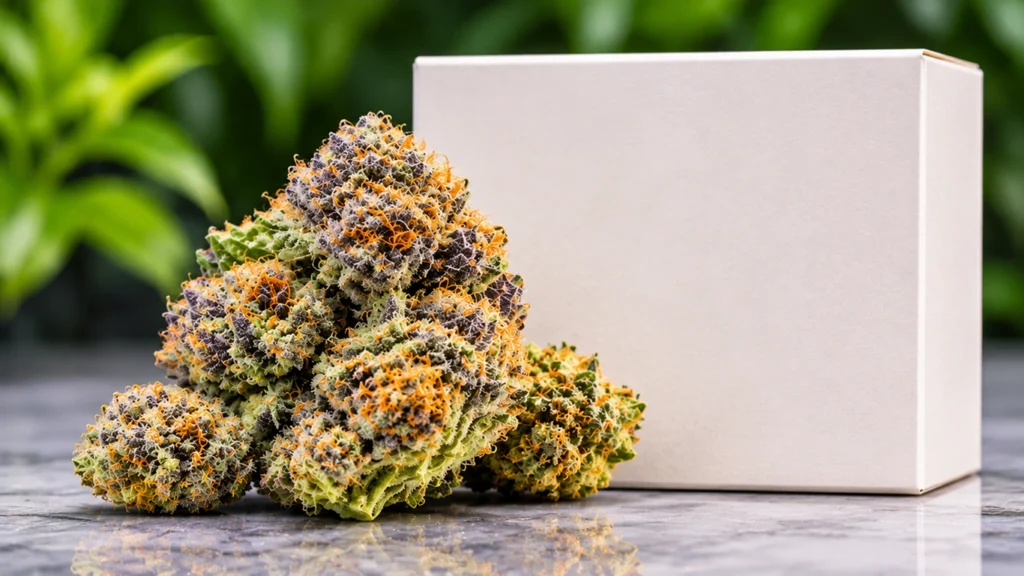
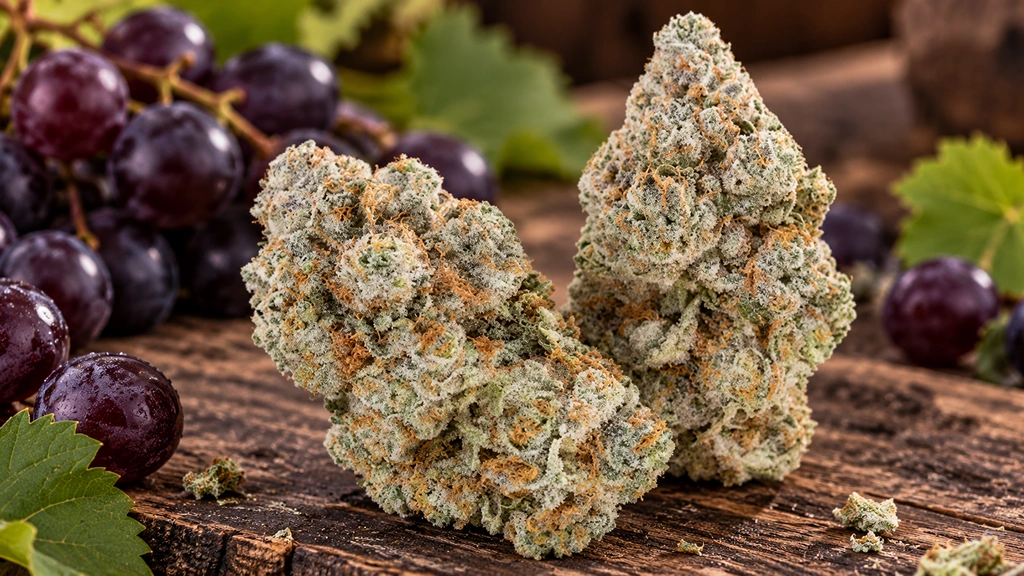
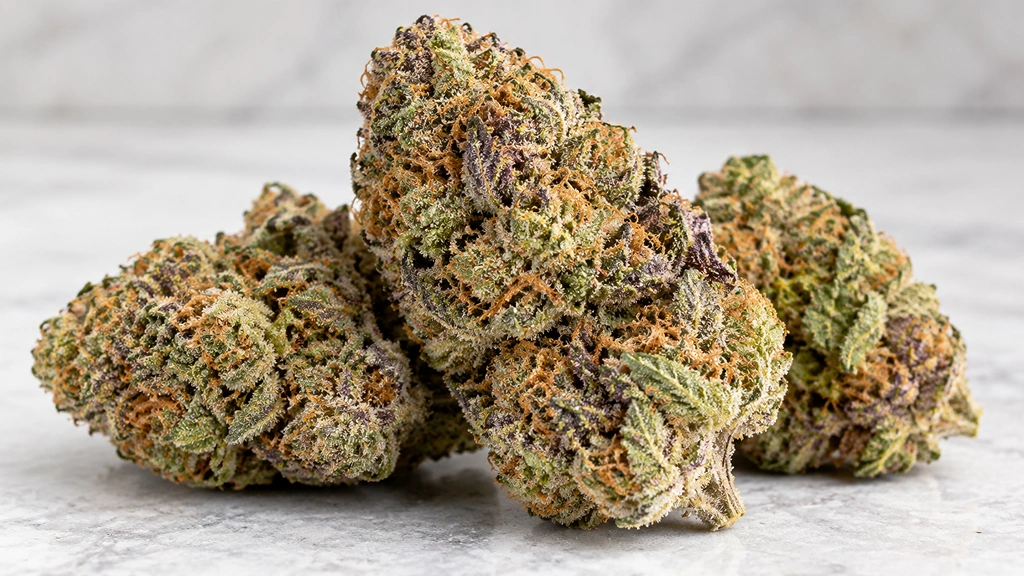
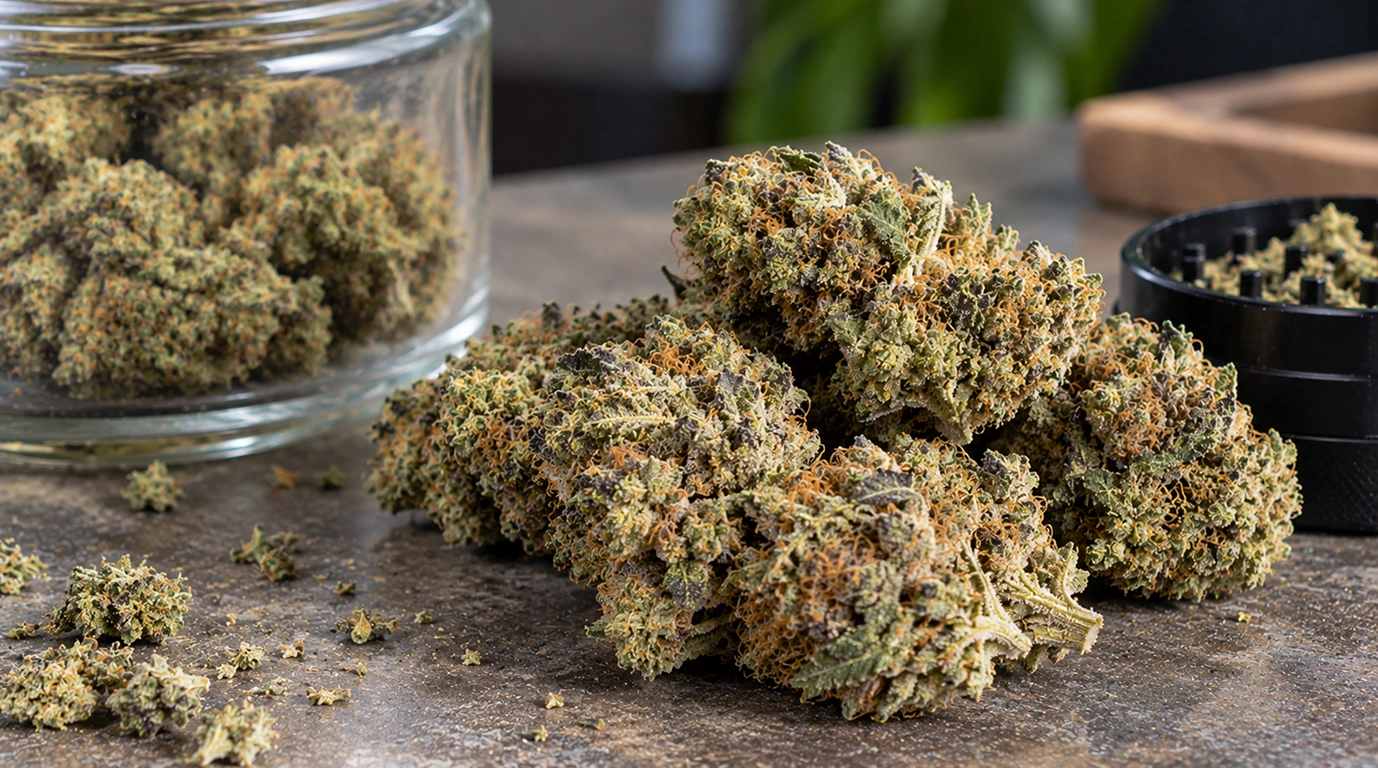
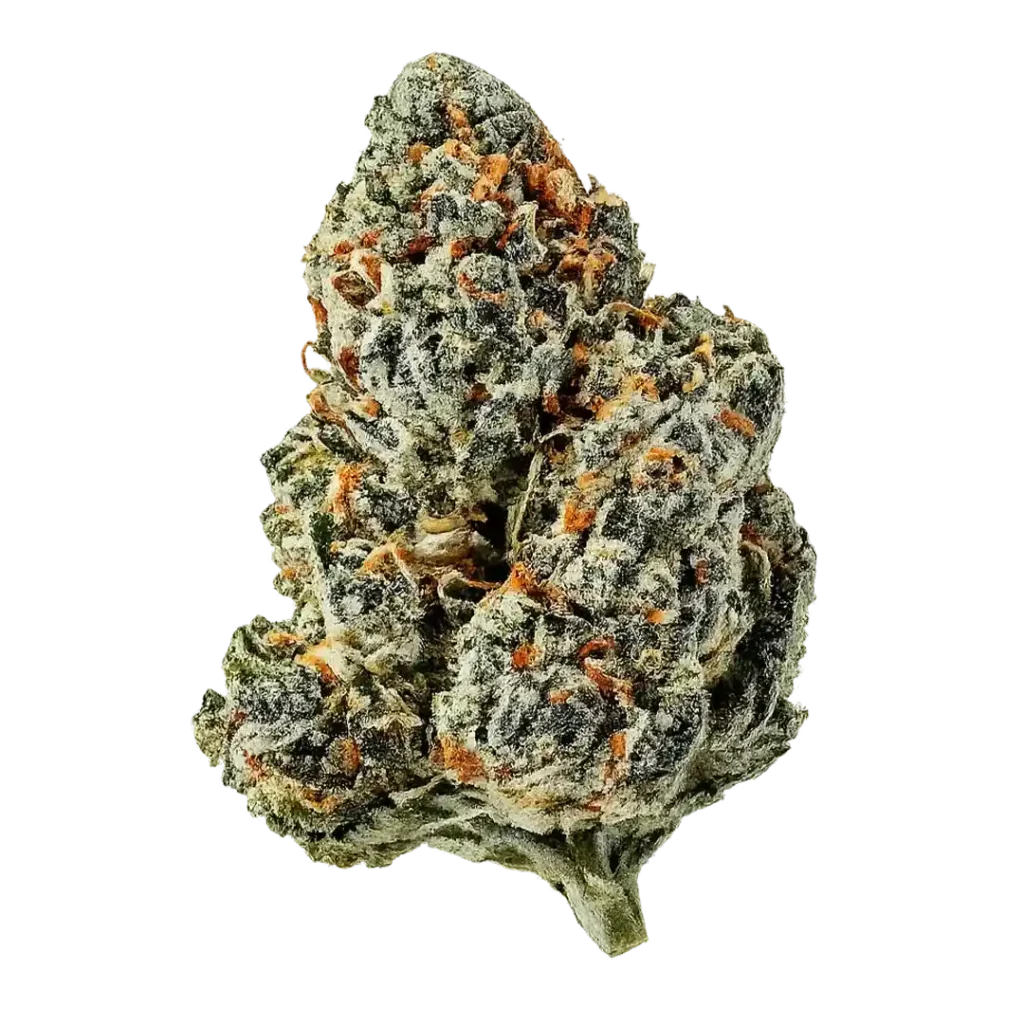
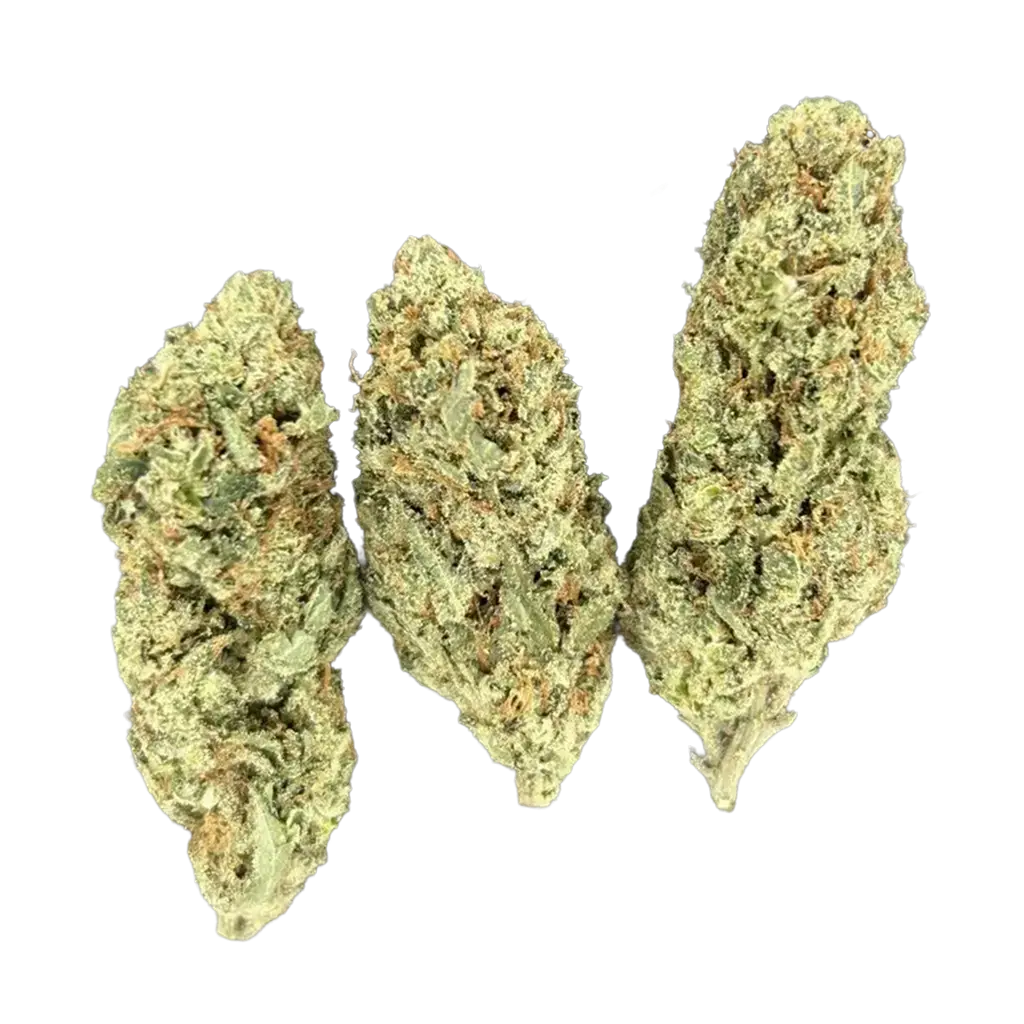
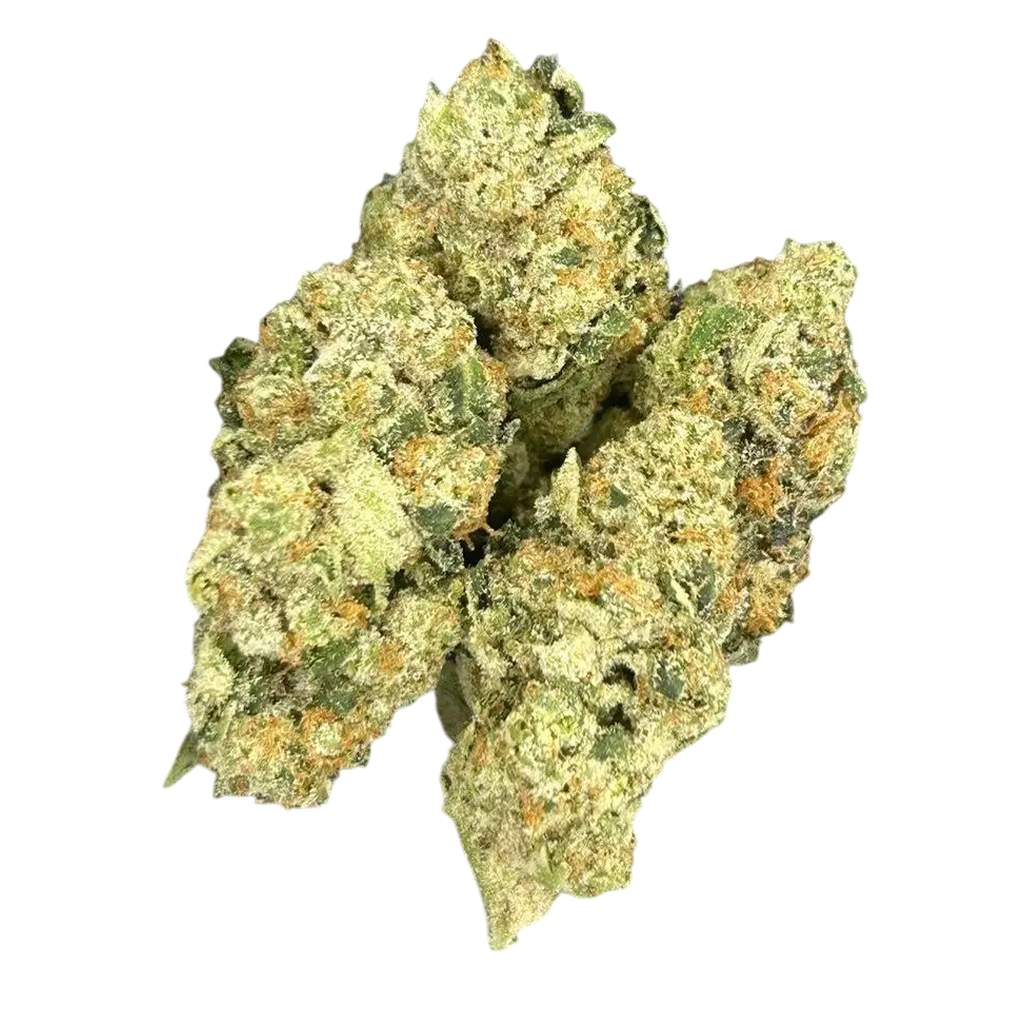
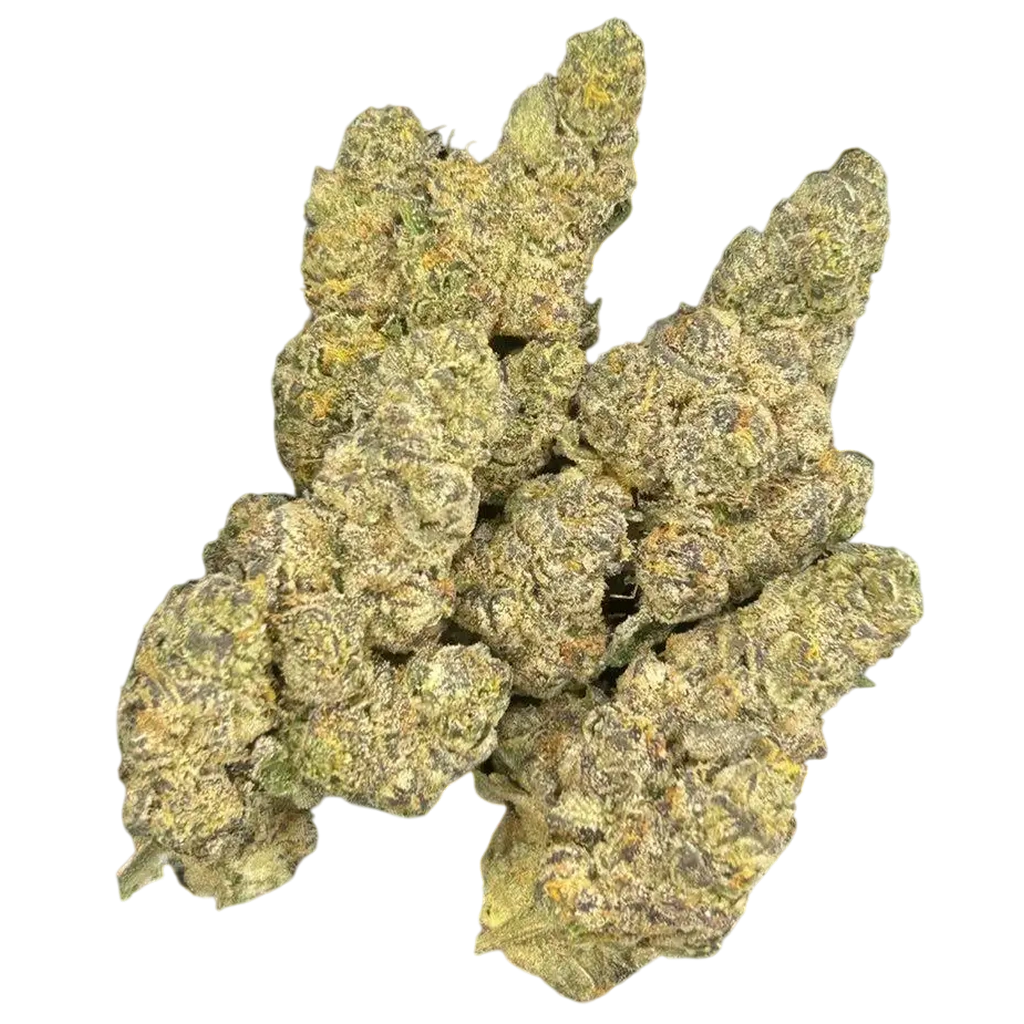
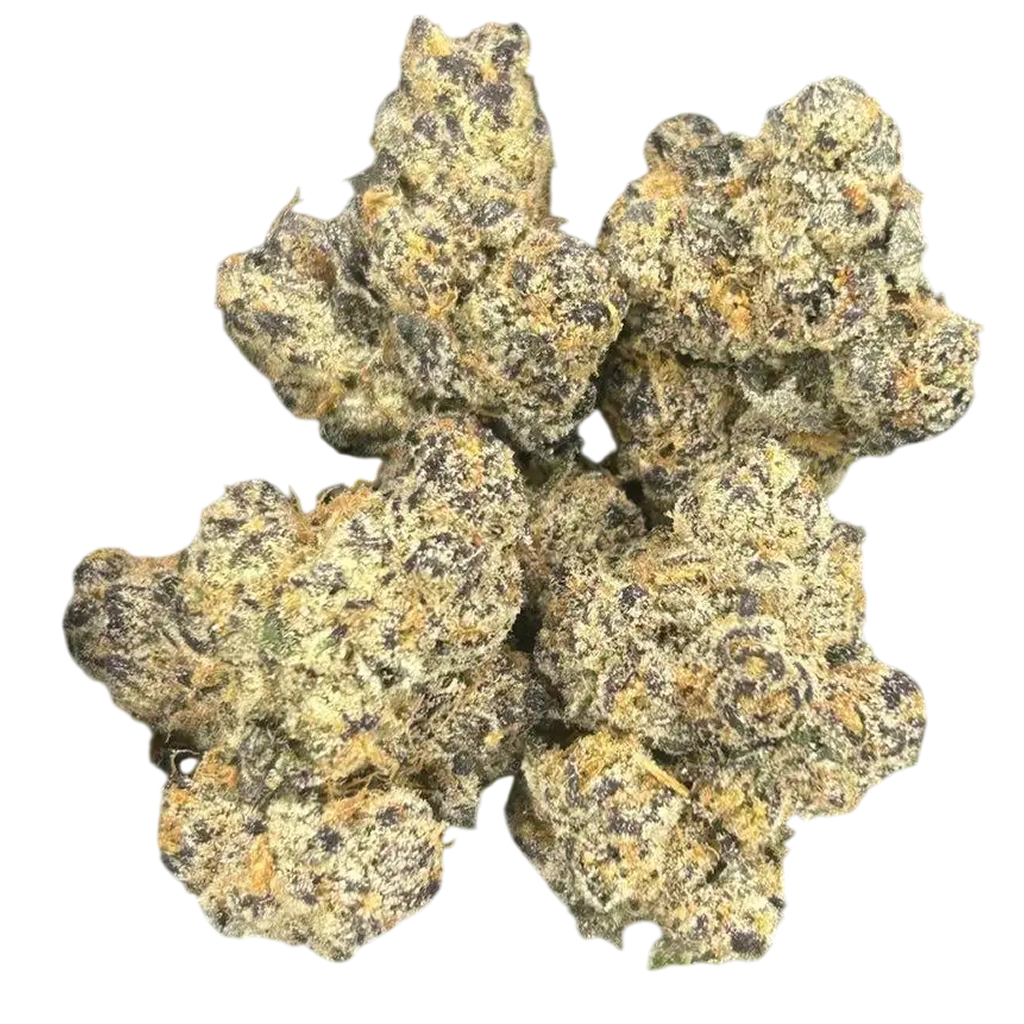
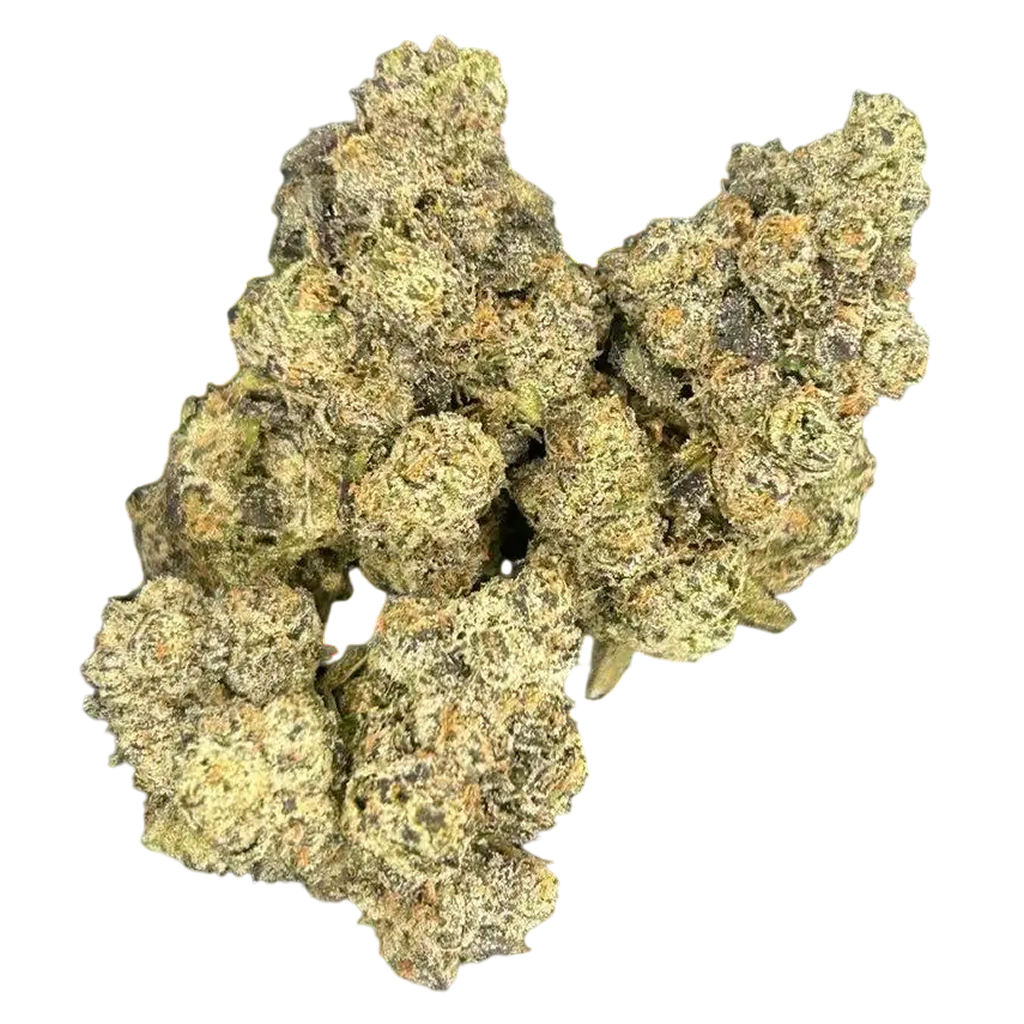
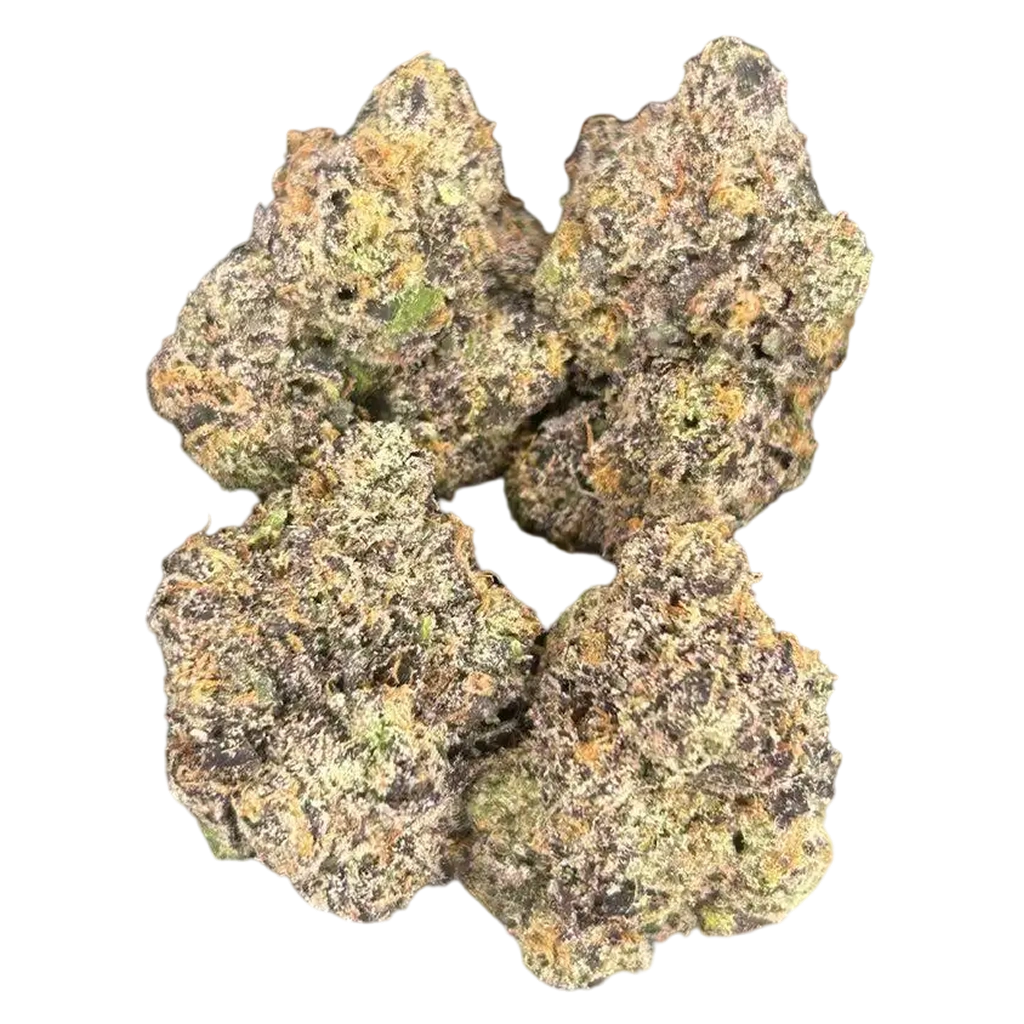
Visually, the buds of the SFV OG strain range from dark forest green to light green, with orange pistils and a coat of frosty trichomes.
The SFV OG strain is very potent, with THC levels typically ranging from 18% to 25%. Dispensary batches usually average around 20% THC, and CBD content is almost always near zero.
In the hemp market, SFV OG flower is marketed by its THCA content rather than THC. Lab results published by hemp retailers typically range from about 23% to 32% THCA, although these figures are reported by the sellers themselves.
It helps to know how THCA converts. When heated, THCA turns into THC. Labs estimate total THC with a simple formula: THCA × 0.877 + delta-9 THC. A flower with 30% THCA and 0.1% delta-9 therefore delivers about 26.4% total THC.
This means hemp-derived SFV OG can be just as potent as dispensary flower, and the same math applies to THCA pre-rolls. First-time users should start slow, and buyers should compare total THC, not only delta-9, on a COA.
To read an SFV OG lab report properly, check five things: the lab, the batch match, the cannabinoid panel, the terpene panel, and the safety screens. Every potency number comes from these reports, so reading them carefully helps you avoid exaggerated claims.
A report that shows potency but lacks safety screens is incomplete, and a report older than a year should be rechecked. Our THCA wholesale FAQ answers more common lab testing questions.
SFV OG belongs to the OG Kush branch of the cannabis family tree. OG Kush has a much-debated ancestry, but Chemdawg and Hindu Kush are usually named as its likely parents. SFV OG, Tahoe OG, and Larry OG are among the best-known phenotypes in the line.
Tahoe OG is the closest comparison. Both are OG Kush cuts, but growers describe Tahoe as heavier and more sedating, while SFV OG is brighter and more lemon-forward.
SFV OG also became a major breeding parent. Breeders used SFV OG Kush strain lines to create:
Other breeders crossed it with Chemdawg #4 to produce SFV Dog, and autoflowering versions are also available.
This lineage explains its reputation. SFV OG connects you directly to the OG Kush family that defined West Coast cannabis and still shapes many modern gas strains, including favorites like Godfather OG.
An SFV OG weed strain and SFV OG THCA hemp flower can be genetically the same but differ in legal classification. They can share the same lineage, aroma, and effects. Marijuana is sold in state-licensed dispensaries, while THCA flower has been marketed as hemp under a federal definition that measured only delta-9 THC.
That is changing:
State laws also come into play. Some states have already banned or limited THCA flower sales, and their timelines differ from federal law.
If you plan to buy or sell this flower, research both state and federal regulations, confirm your supplier is compliant, and consult a lawyer. This information is general in nature and should not be considered legal advice.
The SFV OG strain should be vetted for genetics, lab results, and compliance before you stock it. Because the name is used loosely, asking the right questions can make all the difference for your bottom line.
At TerpSourced, every batch comes with third-party COAs, so you know the potency and terpene content of what you order. Learn more about our sourcing before placing your first order.
Store SFV OG flower in an airtight glass jar in a cool, dark place at 55% to 62% relative humidity. This protects the lemon-pine terpenes and keeps the buds from drying out or growing mold.
Heat, light, and air are the biggest enemies of fresh flowers. Terpenes are volatile, so a warm room can fade the citrus aroma within weeks. Over time, oxygen and light also convert THC into CBN, which changes the effect of the flower.
For retailers, storage is part of quality control. Keep bulk supplies sealed until you portion them, use humidity packs in larger containers, and follow a first-in, first-out (FIFO) system. Checking the harvest or test date helps you sell the freshest flowers first, and ordering from our wholesale THCA shop in quantities you can move quickly keeps stock fresh.
The SFV OG strain is still considered one of the best OG Kush cuts to come out of California. Its lemon-fuel aroma, sticky buds, and two-stage high have kept it popular for more than two decades.
If you are still weighing the SFV OG strain indica or sativa question, remember that the COA matters more than any label. The most common SFV OG strain effects are focus, euphoria, and relaxation, but every batch is different. Whether you are comparing it with the SFV OG Kush strain or choosing between an SFV OG weed strain and hemp flower, verify the lab results and legality first.
TerpSourced is a wholesale THCA supplier with Houston roots and California-grown flower, offering lab-tested THCA products backed by third-party COAs for smoke shops, distributors, and retailers.
SFV OG is a hybrid. Most producers label it as indica-leaning, but some strain databases classify it as sativa-dominant, while others rate it as 70% indica. Research shows these labels mean little, so the COA is a more reliable guide than any classification.
SFV stands for San Fernando Valley, the area of Los Angeles where this OG Kush clone circulated among growers in the early 2000s. The name credits its origin, and the strain gained recognition through a California breeder known as Swerve.
Not exactly. SFV OG is the original clone-only OG Kush cut, while SFV OG Kush is a seed line created by crossing SFV OG with Afghani. Because menus often mix up the two names, always check the supplier’s genetics and COA.
Users most commonly report focus, euphoria, and happiness first, followed by calm body relaxation. Possible side effects include dry mouth, dry eyes, and occasional anxiety at higher doses. Effects vary with dose, tolerance, setting, and the chemistry of each batch.
SFV OG usually smells and tastes like lemon, pine, and earth, with a gassy, fuel-like aftertaste. Myrcene, limonene, and caryophyllene are its most common terpenes, although some batches carry more pinene and a stronger pine flavor. Expect a smooth, citrus-forward smoke.
SFV OG is potent, usually testing between 18% and 25% THC. Hemp THCA versions typically range from 23% to 32% THCA. To calculate total THC, multiply the THCA percentage by 0.877 and add the delta-9 THC percentage. For example, 30% THCA equals about 26% total THC.
SFV OG can be overwhelming for beginners because of its high potency and fast-hitting head high. New users should start with a small amount, wait until they feel the full effects, and choose batches with verified third-party lab results before buying.
Both are OG Kush phenotypes from California. Tahoe OG is usually described as heavier and more sedating, while SFV OG is brighter and more lemon-forward. Tahoe OG Kush, meanwhile, is a cross between the Tahoe OG clone and SFV OG.
Yes, in many states, but only for now. Federal law is set to count THCA toward the hemp THC limit starting December 11, 2026, and some states have already restricted the sale of THCA flower. Check current rules before buying or selling.