Most people buying ‘THCA flower’ don’t realize they’re essentially buying THC. But that is where the confusion begins. What is the difference? Products may look similar, yet their effects, legality, and usage can differ in meaningful ways.
Delta 9 THC is what most people mean when they think of a cannabis high. It’s the compound responsible for that familiar euphoric buzz: what we simply call “THC.” So where does THCA fit in? Every bit of Delta 9 THC actually starts as THCA.
Understanding these differences is important if you want predictable results and confidence in your choices. This guide breaks down THCA vs Delta 9 in a clear, practical way. By the end, you will have a straightforward understanding that helps you choose products with clarity and confidence.
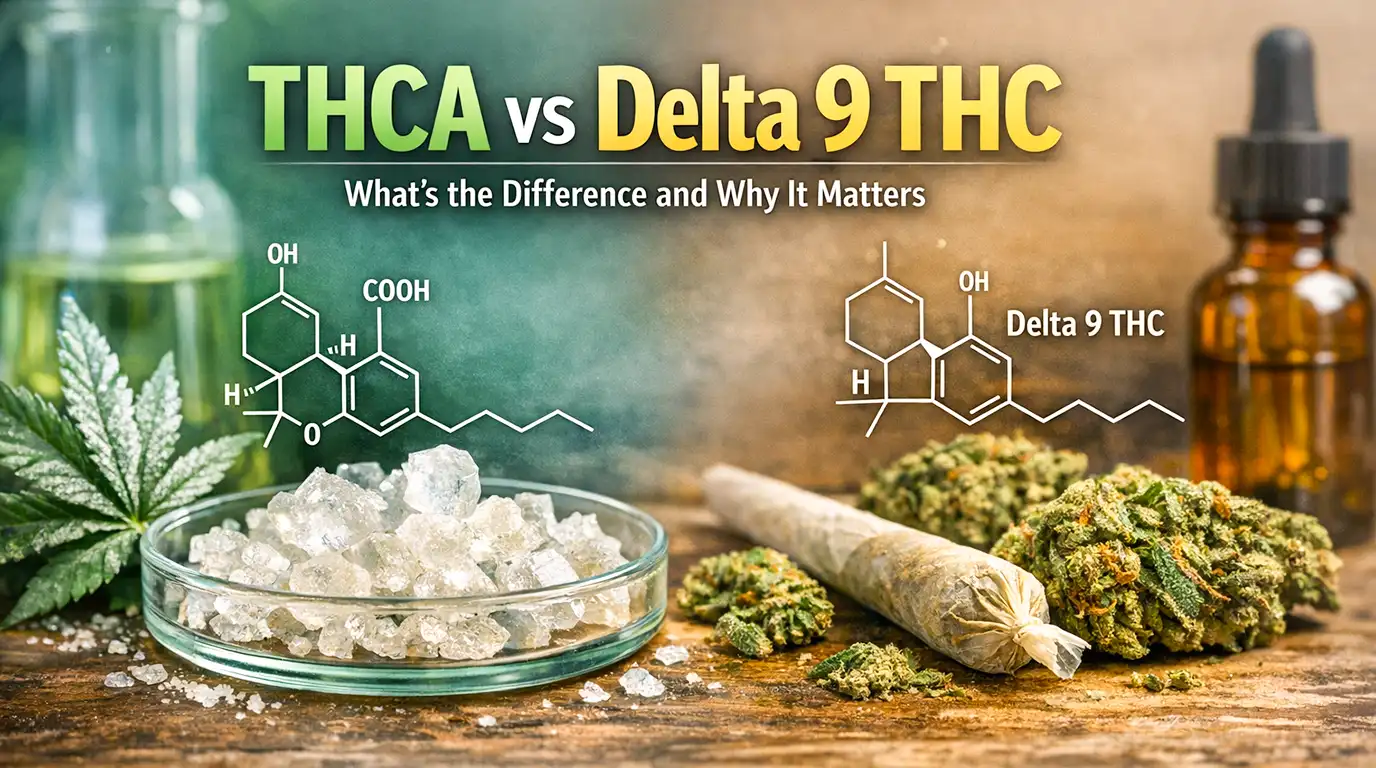
THCA, or tetrahydrocannabinolic acid, is a naturally occurring cannabinoid found in raw and unheated cannabis plants. That “a” in THCa speaks to its acidic state. It is the precursor to Delta 9 THC.
In its natural state, THCA does not produce intoxicating effects. This is because its chemical structure does not interact with the body’s cannabinoid receptors in the same way as Delta 9 THC. THCA is commonly found in:
Many consumers exploring THCA vs THC difference are surprised to learn that THCA is abundant in cannabis before any heat is applied.
Delta 9 THC, often simply called THC, is the primary psychoactive compound in cannabis. It is responsible for the well-known euphoric and relaxing effects associated with cannabis use. Unlike THCA, Delta 9 THC directly interacts with CB1 receptors in the brain. This interaction produces:
Delta 9 THC is typically found in:
When comparing THCA vs Delta 9 effects, the key difference lies in psychoactivity.
The transition from THCA to Delta 9 is a chemical reaction called decarboxylation. This is a fancy term for a simple process: the removal of a carboxyl group through heat or time.
When you apply heat, whether through a lighter, a vaporizer, or the oven when baking edibles, the THCA molecule loses its “acid” tail. This transforms it into Delta 9 THC instantly. This is why smoking raw cannabis flower provides psychoactive effects even though the plant itself mostly contains THCA before it is lit.
| Feature | THCA | Delta 9 THC |
| Chemical Form | Acidic precursor | Active cannabinoid |
| Psychoactivity | Non-psychoactive (raw) | Psychoactive |
| Activation | Requires heat | Already active |
| Common Products | Raw flower, live extracts | Edibles, vapes, flower |
| Effects | Subtle, non-intoxicating | Euphoric, noticeable |
| Legal Status | Often hemp-compliant (if Delta 9 is low) | More regulated |
| Conversion | Converts to Delta 9 when heated | No conversion needed |
When discussing “THCA vs Delta 9 effects,” we have to clarify how the product is being used. Understanding these effects helps set realistic expectations.
If you consume THCA in a way that does not involve heat, such as swallowing a THCA capsule or eating raw flower, you will not experience an intoxicating high.
Instead, many users report a sense of clarity and physical equilibrium. When consumed without heat, THCA is typically described as:
It does not produce a traditional “high.”
If you smoke or vape THCA flower, the effects are virtually indistinguishable from Delta 9 THC. This is because the act of smoking performs the chemistry for you, turning the THCA into Delta 9 before it even enters your lungs. Delta 9 THC produces noticeable effects such as:
The intensity depends on dosage, tolerance, and product type.
This is a common question with a nuanced answer. On a milligram-to-milligram basis, they are not quite equal. When THCA converts to Delta 9, it loses about 12% of its molecular mass.
Therefore, a strain with 20% THCA will result in roughly 17.6% Delta 9 THC after decarboxylation. While THCA isn’t “stronger,” high-percentage THCA products provide a potent experience once heated.
The comparison of THCA flower vs Delta 9 products is one of the most common areas of interest.
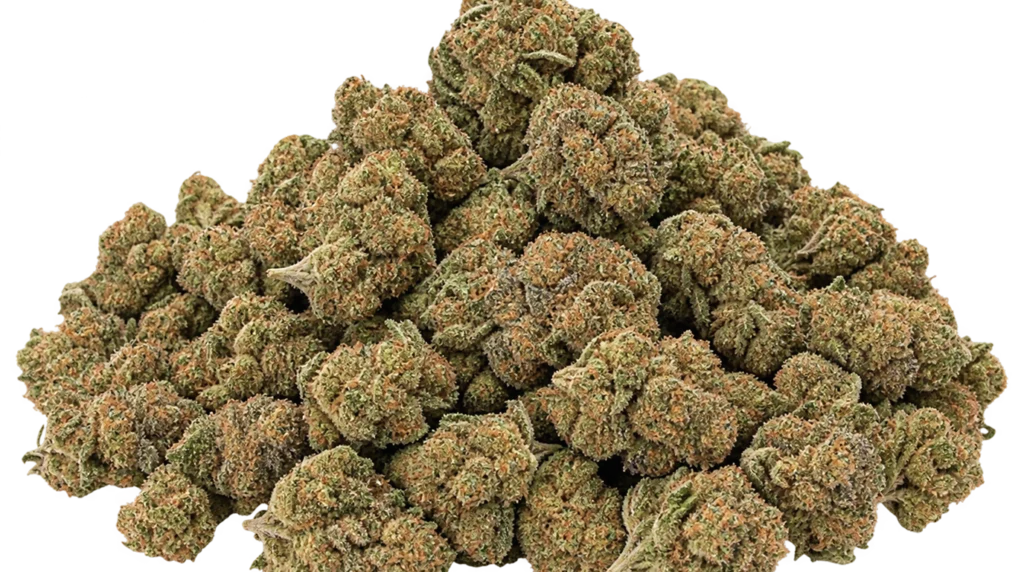
THCA flower looks and smells like traditional cannabis. The key difference lies in how it is tested and labeled.
These products already contain active THC and include:
They deliver consistent effects without requiring conversion.
If you plan to smoke or vape, THCA flower and Delta 9 flower can feel very similar because THCA converts during use.
The legality of these compounds is rooted in the 2018 Farm Bill, which legalized hemp and its derivatives, provided the Delta 9 THC content remains below 0.3% by dry weight. Since THCA is not Delta 9, hemp flowers with high levels of THCA have been legally sold across the United States for years.
THCA products are often categorized as hemp-derived when:
This has allowed broader availability in many regions.
Delta 9 THC is more tightly regulated and typically restricted to:
Several developments are shaping the landscape:
These updates are designed to improve clarity and standardization, helping consumers make informed choices.
| Misconception | Reality |
| “THCA products do nothing” | THCA is non-psychoactive in its raw form, but it is not inactive. When heat is applied, it converts into Delta 9 THC and becomes psychoactive. |
| “THCA and Delta 9 are completely different” | THCA and Delta 9 are closely related. THCA is the natural precursor found in raw cannabis, and Delta 9 THC is the activated form created through heat. Same chemical progression. |
| “THCA flower is weaker” | THCA flower is not inherently weaker. In raw form, it does not produce a high. However, when smoked or vaped, THCA converts into Delta 9 THC, delivering effects similar to traditional cannabis. |
| “THCA is always non-psychoactive” | THCA remains non-psychoactive only when unheated. Most common consumption methods such as smoking, vaping, or cooking activate it. Once heated, it behaves like Delta 9 THC. |
The “THCA vs Delta 9” debate isn’t about which one is better; it’s about understanding the chemistry of the plant to better serve your personal goals. Your choice depends on how you plan to use the product.
Always consider how the product will be consumed. Heat changes everything in the THCA vs Delta 9 comparison.
The difference between THCA vs Delta 9 is straightforward once you understand the science behind it. THCA is the inactive precursor, while Delta 9 THC is the active compound responsible for psychoactive effects. The key factor is heat, which transforms one into the other.
As regulations evolve in 2026, clarity around labeling and total THC calculations is improving. This benefits consumers by making product information more transparent and easier to interpret.
When choosing between THCA and Delta 9, focus on how you plan to use the product and the experience you want.
At TerpSourced, we focus on clarity, transparency, and quality at every step. If you want to explore thoughtfully crafted products and learn more, you can contact us.
THCA is the raw, non-psychoactive form of THC found in fresh cannabis. Delta 9 THC is the active compound that produces a high. The key difference is that THCA must be heated to convert into Delta 9 THC, which then creates noticeable effects.
THCA does not produce a high in its raw form because it does not bind effectively to cannabinoid receptors in the brain. However, when heated through smoking, vaping, or cooking, it converts into Delta 9 THC, which can produce psychoactive effects.
THCA is not stronger than Delta 9 THC on its own because it is non-psychoactive. Once heated, THCA converts into Delta 9 THC. At that point, the strength depends on dosage, cannabinoid concentration, and individual tolerance rather than the original form.
Yes, THCA converts into Delta 9 THC when exposed to heat through a process called decarboxylation. Smoking, vaping, or cooking cannabis activates this conversion, which is why THCA-rich flowers can produce effects similar to traditional THC products.
THCA is often considered hemp-compliant if Delta 9 THC levels remain below 0.3% before heating, based on current federal guidelines. Delta 9 THC is more regulated and typically available through licensed markets. Ongoing updates in 2026 may further clarify how total THC is measured.
You buy bulk THCA flower from a compliant supplier that...
A buyer we talked to last month put it simply:...
Walk into enough smoke shops, and you’ll notice the same...



Sign up for exclusive wholesale offers, new product alerts, bulk pricing updates and more.

No spam. Unsubscribe anytime. ❤️