In the high-stakes world of cannabis procurement, an ounce, universally known among professional operators as a “zip”, consists of exactly 28 grams for retail purposes. While the scientific measurement is technically 28.35 grams, the commercial standard has been solidified at 28 to allow for the seamless breakdown of inventory into smaller units.
If you are moving volume, understanding how many grams in a zip of weed are required to balance your ledgers is the difference between a profitable quarter and a reconciliation nightmare. This guide provides the technical clarity and pricing logic necessary for serious wholesale buyers.
The cannabis industry runs on a simple rule that one ounce of weed equals 28 grams. Walk into any licensed dispensary from California to New York, and that same 28-gram bag is what you get. A “zip” gets its name from the Ziploc bag that perfectly holds that amount, a slang term so common that even wholesale buyers use it daily.
The number 28 serves as the anchor for all other cannabis measurements. An Eighth (3.5g) is simply 28 divided by 8. A Quarter (7g) is 28 divided by 4. A Half-Zip hits the scale at 14 grams exactly. This consistency matters for operators who need to forecast margins. When you price a quarter-pound or QP (Quarter Pound) at 112 grams, you are working off the same 28-gram base. No other number gives you that clean divisibility.
Here’s a clean, operator-focused breakdown in tabular format showing how 28 grams anchors every major cannabis quantity tier:
| Quantity Term | Weight (Grams) | Calculation Logic | Practical Use Case |
| Ounce (Zip) | 28g | Base unit | Standard bulk retail and pricing benchmark |
| Eighth (1/8 oz) | 3.5g | 28 ÷ 8 | Entry-level retail unit with the highest per-gram margin |
| Quarter (1/4 oz) | 7g | 28 ÷ 4 | Mid-tier purchase balances affordability and margin |
| Half-Zip (1/2 oz) | 14g | 28 ÷ 2 | Popular bundle size with strong turnover potential |
| QP (Quarter Pound) | 112g | 28 × 4 | Bulk buying tier where real margin expansion begins |
Everything scales cleanly from 28 grams. That consistency lets you forecast pricing, split inventory, and calculate margins without friction. The moment you lose track of this base, your pricing structure becomes inconsistent, and that’s where profit quietly disappears.
In the professional landscape, an ounce of weed is commonly referred to as a “zip” by seasoned procurement specialists and retail managers alike. When calculating your internal inventory metrics, knowing how many grams are in a zip of weed is the difference between a balanced ledger and a loss.
While a casual consumer might accept a rounded figure, a high-volume enterprise must account for the actual scientific weight of the product. Standardizing your measurements against digital scales ensures that every pre-roll and jar leaving your facility maintains the reputation of your brand among elite buyers.
If you are managing retail displays or training budtenders, you know that visual volume is a deceptive metric that can lead to customer disputes if not handled correctly. An ounce of weed is not actually a fixed size, rather it is a fixed weight, and the physical footprint varies wildly based on structural density.
In the industry, we call this the “Air vs. Mass” trap. A bag of fluffy, outdoor-grown Sativa might look like a mountain, while a vacuum-sealed pack of dense, high-potency Indica looks like a handful of pebbles. For a professional buyer, understanding this displacement is the key to selecting the right Mylar sizing and avoiding “dead space” in your display cases.
In the wholesale game, size is often an illusion, but weight is an absolute. You are moving products to generate profit, not to fill space. When you are eyeing a new shipment, do not be fooled by large, airy buds that lack the resinous weight of a tighter, more professional trim.
Usually, a physically smaller, denser ounce often carries a higher concentration of cannabinoids, offering a better retail turnaround than “fluff” that takes up three times the shelf space for half the potency.
If you think every 28-gram unit is created equal, you are leaving money on the table and risking your reputation with savvy buyers. Weight is a constant, but quality is a variable that dictates whether that flower moves in forty-eight hours or sits in your vault for forty-eight days.
A High-tier flower is characterized by heavy resin production and compact bract architecture, which significantly increases the density of the buds. When you pull a zip from a premium batch, the weight isn’t coming from moisture or stems, it is coming from a concentrated “frost” of trichomes that professional buyers demand.
In this industry, “magic” is just another word for poor inventory management. You aren’t looking for a “surprise mixed bag”. Essentially, you are looking for consistency that reflects your brand’s standards. Larger colas represent the “king-sized” premium units that justify your top-tier pricing, while smaller buds should be relegated to pre-rolls or discounted “budget” bags.
If your current supplier cannot guarantee a consistent ratio of large, resin-dense buds in every grams in a zip of weed you purchase, you are effectively subsidizing their sloppy harvest practices. Demand data, verify the density, and only stock flowers that carries its weight in resin, not air.
Let’s talk about the only number that actually keeps your lights on the price of an ounce of weed. In the current U.S. landscape, seeing a range of $150 to $300 for a retail zip is standard, but if you are operating at scale, those numbers are just the surface level.
Pricing is not a “one size fits all” game, it is a calculated response to regional supply gluts, brand equity, and the technical specs of the harvest. If you are treating your inventory like a generic commodity, you are losing to the competitor across the street, who knows how to price their tiers based on real-time market velocity.
The “it depends” answer doesn’t work when you’re looking at a P&L statement. You need to know exactly what your landed cost is per unit to ensure you aren’t just “trading dollars.”
If you are still stocking your shelves by chasing small-batch “drops” without a bulk strategy, you are operating a hobby, not a business. In the high-stakes B2B landscape, the decision to buy by the zip or the pound isn’t about personal preference, it is about crushing your overhead and widening your retail spreads.
Every time you opt for smaller increments like a half ounce to grams weed calculation over a full-volume purchase, you are hemorrhaging capital on redundant packaging, labor, and shipping logistics. Smart operators treat their vault like a treasury, where buying in bulk is the primary lever for price manipulation in their local market.
When you secure a bulk shipment of grams in a zip of weed through a trusted partner, you gain the tactical advantage required to dictate the pricing floor in your territory. Leverage the bulk deal, protect your points, and leave the small-batch “bargain hunting” to the amateurs who aren’t serious about their P&L. But the real math lies in these.
So, stop thinking like a consumer looking for a deal and start thinking like a distributor looking for a market capture. In this industry, the “economies of scale” is the real difference between an operator who scales and one who gets acquired for pennies on the dollar.
If you are operating in the Colorado market, you need to stop treating compliance like a suggestion and start treating it like the foundation of your business model. The statutes regarding possession are surgical: as an adult aged 21 or older, carrying a zip is legally equivalent to owning any other regulated consumer goods.
However, the ceiling for legal possession currently sits at 2 ounces, and crossing that threshold without a commercial transporter license is an invitation for state-level scrutiny. For a professional, “ignorance of the law”is a fast track to a revoked permit and a spiked blood pressure reading that no strain can fix.
Managing a diverse inventory requires your staff to be fluent in the conversion from a half ounce to grams of weed to ensure fast service. A half ounce consistently weighs in at 14 grams, providing a middle-ground price point for consumers who want more than a quarter but aren’t ready for a full zip.
Most shops find that the half-ounce SKU is a high-velocity item because it hits the “sweet spot” for pricing while offering enough volume for a week of use. Training your team to recognize these weights visually can speed up the packaging process and reduce the time customers spend waiting at the counter.
When you are negotiating with large-scale cultivators, the question of whether an ounce is 28 or 28.35 grams becomes a major factor in your total cost of goods. The actual scientific ounce is 28.3495 grams, but the retail industry has largely adopted 28 grams as the “commercial ounce” to make packaging math easier.
If your supplier is billing you for 28.35 but you are only yielding 28 grams in your retail jars, you are losing over 1% of your inventory. This discrepancy might seem small on a single unit, but across 100 pounds, you are essentially losing an entire pound of Weed to “mathematical shrinkage.”
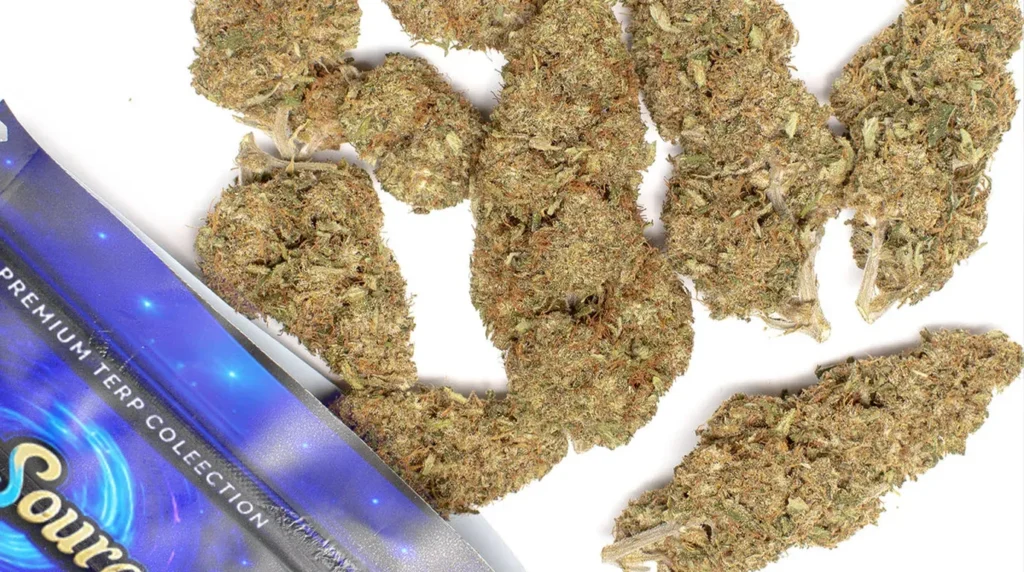
After acquiring all this, if you are still wondering how they look and compare by weight. Here’s the easiest way to catch.
Mastering the math of grams in a zip of weed is the baseline requirement for any serious buyer who is looking to build their market with precision. By understanding how many grams in a zip calculation affects everything from your retail price points to your tax liabilities, you position your business as a professional entity.
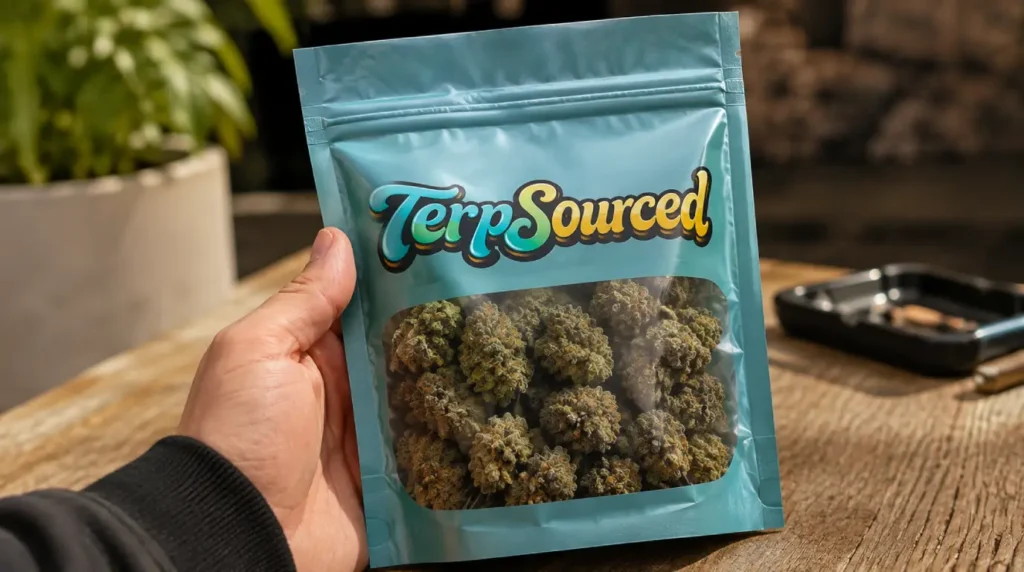
TerpSourced helps you navigate this complex market by providing access to verified, lab-tested products that meet the highest industry standards for weight, potency, and purity. We ensure that every shipment you receive is precisely measured and fully documented so you can focus on scaling your operations and maximizing your retail margins.
Ounce pricing determines your base cost structure, which directly impacts your resale margins. Buying at lower bulk rates increases profit potential, while overpaying reduces competitiveness. Smart buyers focus on volume discounts and supplier reliability instead of just chasing the lowest upfront price.
Yes, purchasing a full zip is almost always more cost-effective than buying smaller increments due to bulk pricing tiers. Professional shops offer “break-price” incentives for larger volumes because it reduces the labor and packaging costs associated with processing eight individual units, allowing for better margins for the buyer.
Weight conversions influence how you break down inventory for resale, pricing tiers, and packaging strategy. Understanding these conversions allows you to create flexible product offerings, optimize margins across different quantity levels, and respond effectively to changing customer demand without overstocking.
No, professional dispensary standards require “net weight” measurements, meaning the scale must be tared to exclude the weight of the jar or bag. If you are being charged for the weight of the packaging, you are being shorted on the product, which is a major red flag for any professional supplier.
Wholesale prices vary by market, but a premium indoor-grown zip typically ranges from $150 to $300, depending on the state and current supply levels. Buyers should look for the best balance of price and lab-tested quality to ensure they are getting a product that will move quickly off their shelves.
Walk into enough smoke shops, and you’ll notice the same...
As a person enters the dispensary, there is a possibility...
Most of the cannabis users pay attention to getting the...



Sign up for exclusive wholesale offers, new product alerts, bulk pricing updates and more.

No spam. Unsubscribe anytime. ❤️