Most people talking about thcv vs thca are either guessing, repeating marketing hype, or pushing whatever they have in stock that week. Let’s cut through that noise. These two cannabinoids behave completely differently, and confusing them can cost you money, customers, and credibility. One leans toward functional, fast-acting energy, while the other is raw potential waiting for heat to activate.
But that confusion? It’s where people get sold hype instead of a real product. Inspecting closely, you will find that one is about energy and appetite control, while the other is just a raw THC waiting to activate and unleash its full potential.
If you’re moving product or building something serious, you need to understand what actually sells, what actually works, and what’s just dressed-up mids.
THCV and THCA aren’t even playing the same game, but the market keeps lumping them together like they’re interchangeable. They’re not. One is all about potential that turns into a classic high once heat hits, while the other delivers a completely different, more functional experience right out of the gate. If you’re treating them the same, then you’re making decisions that cost you in quality and positioning, and will affect your long-term strategy.
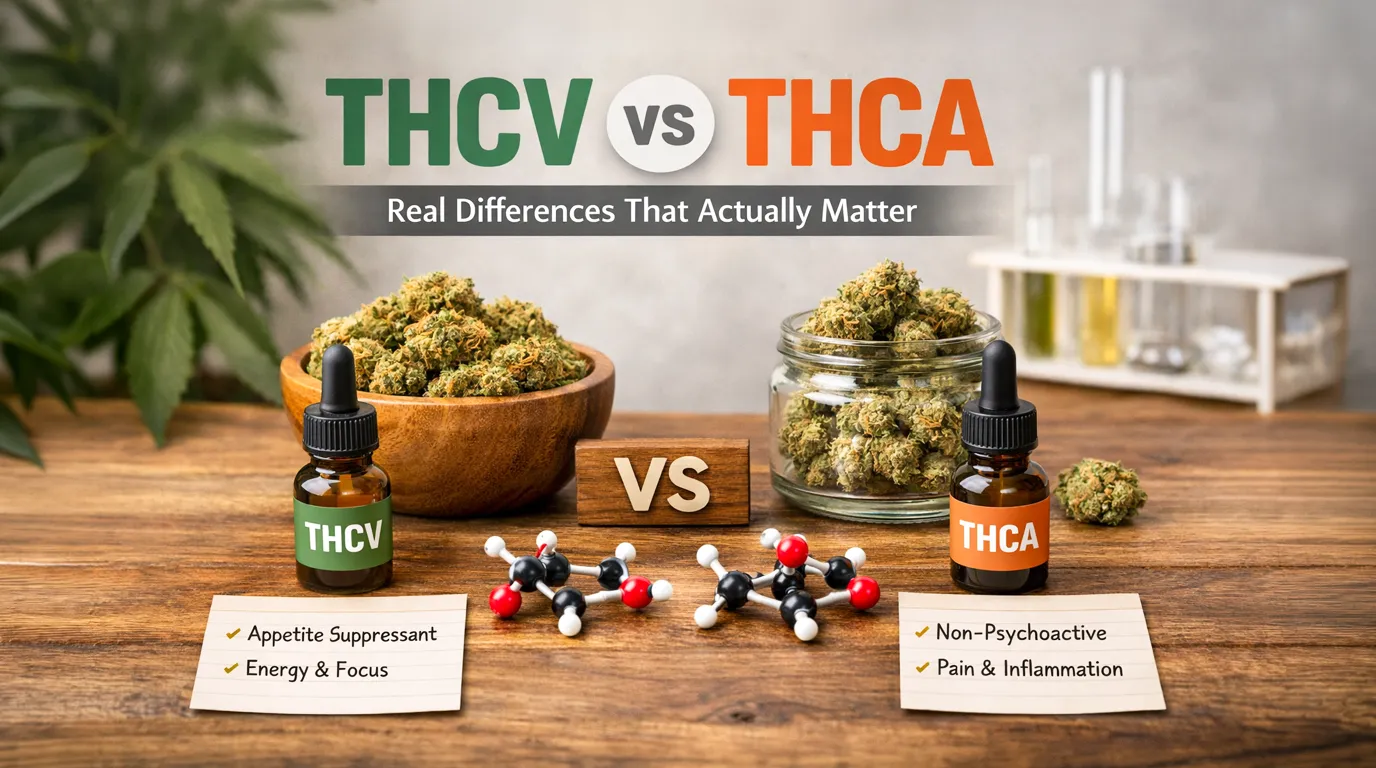
So, let’s not overcomplicate it. The basic fact is that THCA is basically a raw THC before activation. THCV(Tetrahydrocannabivarin) is a completely different cannabinoid with a different effect profile. They’re not substitutes. They’re not competitors. They solve completely different appetite cases. Think of it like this
If you’re treating them the same, you’re already making a bad call.
| Factor | THCA | THCV |
| Basic Identity | Raw, inactive form of THC found in fresh cannabis before heat activation | A completely different cannabinoid with its own unique effects and behavior |
| Core Function | Converts into THC when heated, delivering the traditional cannabis high | Interacts differently with the body, often producing lighter, more functional effects |
| Psychoactive Nature | Non-psychoactive until heated, then becomes strongly psychoactive THC | Mildly psychoactive at higher doses, but generally more clear-headed and subtle |
| What Triggers Effects | Heat (smoking, vaping, dabbing) activates it instantly into THC | Does not rely on conversion, works in its natural form |
| User Experience | Heavy, full-body or head high, depending on strain and terpene profile | Light, energetic, focused, and shorter-lasting experience |
| Market Demand | High demand due to similarity with traditional cannabis effects | Niche demand driven by educated and experience-focused users |
| Use Case | Recreational use, relaxation, and strong psychoactive sessions | Daytime use, focus, productivity, controlled effects |
| Legal Positioning | Fits current hemp loopholes but faces future regulatory risk | Generally safer in legal terms due to non-THC-like behavior |
| Product Types | Flower, pre-rolls, concentrates marketed as hemp-derived | Extracts, vapes, and specialized strains with targeted effects |
| Strength Perception | Perceived as strong because it converts into THC | Perceived as mild or functional, not designed for heavy intoxication |
| Quality Concerns | High risk of sprayed garbage or midwives wearing exotic clothes in the market | Less prone to fake enhancement, but still depends on clean sourcing |
| Business Strategy Fit | Ideal for volume-driven operations focused on current demand | Ideal for premium, niche positioning and future-forward product lines |
| Future Outlook | Likely to face stricter rules under total THC regulations | Expected to grow as demand for functional cannabinoids increases |
The market mixes these two up for one simple reason—it benefits from the confusion. Similar names, same plant origin, and aggressive marketing make them look like they belong in the same lane, but they don’t. One converts into something people already understand, while the other behaves completely differently, and that gap gets blurred on purpose.
When everything is labeled “rare” or “next big thing,” it becomes easier to sell hype than to explain reality, and that’s exactly where most people get misled.
Here’s the problem. Everything gets labeled as “new” or “rare,” and people assume similar effects. So, why does this confusion exist? Because both come from cannabis, &.both sound similar in name.
But here’s where it falls apart. When THCA converts into THC, it does not behave like THC at all. Hence, their effects and demand patterns are completely different. This isn’t a subtle difference. It’s a category difference.
Let’s be real about it! THCA isn’t doing anything special on its own, and that’s where most of the confusion starts. In its raw form, it just sits there, inactive, with all the potential but none of the effect. The moment heat enters the picture, everything changes as heat strips off that acid group, and just like that, it turns into THC. So when people hype THCA, what they’re really talking about is what it becomes, not what it actually is before activation.
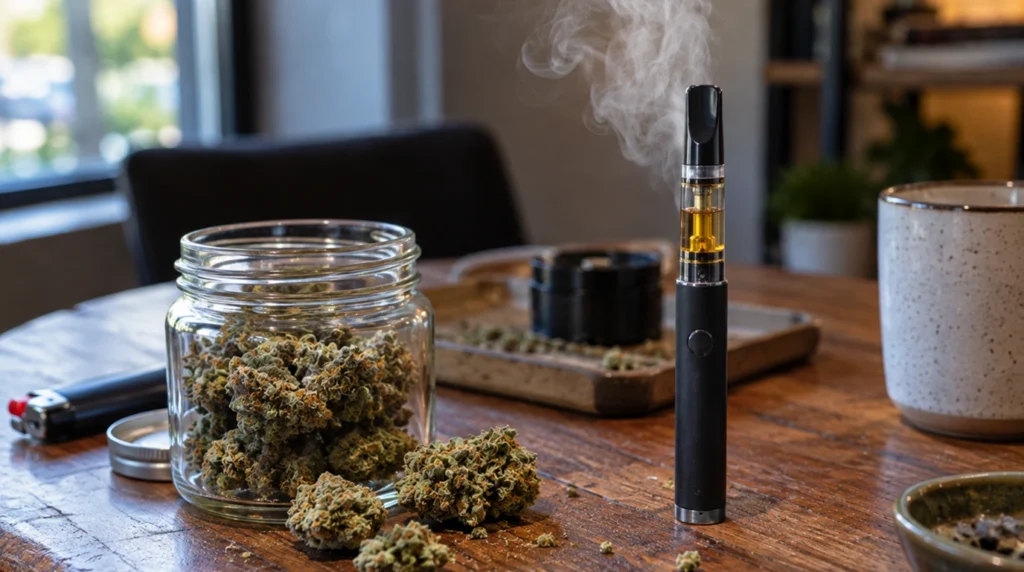
THCA sits in raw cannabis, doing nothing psychoactive until heat hits it. Then everything changes. When heat removes that acid group. All, gone in a second. What remains is now THC. That means that smoking activates it instantly, and vaping does the same. The experiences come from THC, not THCA. So when people hype THCA, what they’re really selling is future THC.
THCV stands out because it doesn’t follow the same script as the rest of the cannabinoids people are used to. While most compounds lean toward heavy, relaxing, or intoxicating effects, THCV moves toward a cleaner, sharper, and more functional approach.
It’s not about getting couch-locked or zoning out; it’s about staying present, alert, and in control. That difference completely changes how the product is experienced, and that’s why it attracts a very different kind of user. THCV doesn’t follow the same rules. It’s not about getting heavy or couch-locked. It’s about:
Some even call it “diet weed,” but that’s oversimplified. But the real difference? THCV interacts with the body differently and doesn’t deliver that heavy THC-style experience.
Forget lab charts and fancy cannabinoid breakdowns, this is where reality hits. When people compare thcv vs thca, what they actually care about is simple: how does it feel when you spark it?
Let’s start with THCA. Assume you light it, take that first pull, and within minutes, you feel that familiar wave. It builds steadily, not rushed, not chaotic. Your body loosens, your mind softens, and everything starts to slow down just enough to feel good. This is what people expect when they buy cannabis—and when the product is real, indoor, it delivers every single time.
Now THCV is a different story. The first hit feels lighter, sharper, almost like a mental switch flipping on instead of melting down. There’s clarity, alertness, and a noticeable lack of heaviness. You don’t sink into the couch, you stay upright, aware, and functional. That’s why some people describe it as “daytime weed,” but that label oversimplifies it.
Here’s the catch most people don’t talk about. If the THCV concentration isn’t strong enough—or worse, if it’s just sprayed product pretending to be something exotic—you’ll barely feel anything. No punch, no depth, just a weak, short-lived buzz that fades before it even registers. That’s why so many buyers get disappointed.
Real experience comes down to quality, not just cannabinoids. Good THCA flower burns clean, tastes loud, and leaves a lasting impression. You feel it in the chest, the head, the body—balanced and complete. Meanwhile, real THCV products feel precise and controlled, but only when sourced correctly from authentic genetics.
So the difference isn’t just chemical, as it’s experiential. One gives you that full-spectrum, familiar cannabis ride. The other gives you a targeted, functional edge. And if you’re holding mids dressed like exotics, neither will feel the way it should.
So, as you now know, the science behind it. Let’s talk business. THCA is dominating right now because it mimics traditional cannabis. Moreover, it fits into hemp compliance gaps & it delivers expected effects.
THCV, on the other hand, follows niche demand as it appeals to specific users requires more education to sell. So while THCV sounds exciting, THCA moves volume. That’s the harsh reality
If you ever encounter confusion regarding the quality of your product, you must check these
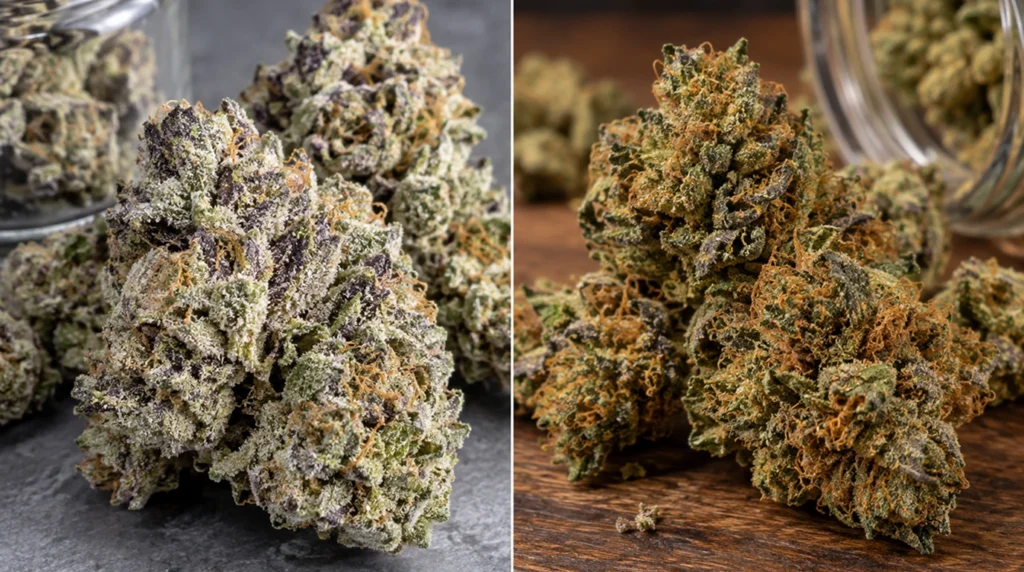
What Real THCA Looks Like
These are real indoor from a real licensed grow and have natural terpene profiles. They also have a clean burn and a strong effect.
What Fake THCA Looks Like
An inferior quality strain is undoubtedly a sprayed garbage, trying to boost its potency. They have an artificial smell that masks poor quality.
What Real THCV Looks Like
They have clean extraction or properly bred strains. Moreover, they have a subtle but distinct effect. Also, no artificial enhancement is needed. If it looks too loud or feels off, it probably is.
| Hype | Reality |
| THCV and THCA are basically the same thing | They are completely different cannabinoids with different effects, functions, and market roles, not interchangeable options |
| THCV gets you high like THCA products | THCV delivers a much lighter, clearer effect, while THCA converts into THC and produces a strong psychoactive high |
| THCA is already psychoactive on its own | THCA does nothing until heat activates it, and then it becomes THC instantly |
| THCV is just a weaker version of THC | THCV isn’t weaker—it’s different, offering functional, short-lasting effects instead of heavy intoxication |
| THCA products are always stronger than THCV products | Strength depends on use case, but THCA feels stronger because it converts into THC, not because it is inherently more powerful |
| THCV is rare, so it must be better | Rarity doesn’t equal quality or demand, and THCV serves a niche audience rather than mainstream use |
| All THCA flower is premium because of its high percentages | Many products are sprayed with garbage or midwives wearing exotic clothes, despite impressive lab numbers |
| THCV products don’t require quality checks | Poor extraction or sourcing can still ruin THCV products, even if they’re less commonly faked |
| THCA is legally safe in the long term | Regulatory changes are targeting THCA through total THC rules, making its future uncertain |
| THCV has no real market demand | Demand is smaller but growing, especially among users looking for functional, daytime-friendly effects |
This space isn’t “fully legal.” It’s strategically compliant. When people debate about thcv vs thca, they usually ignore the one thing that can shut down a deal overnight: legal positioning. Not theory. Not Reddit opinions. Real enforcement risk. But here’s the real truth.
THCA exists in a loophole-driven ecosystem. On paper, it’s compliant because delta-9 THC levels stay below federal limits before heat is applied. That’s the key detail. Once it’s burned, it behaves exactly like traditional cannabis. Everyone in the game knows about how it’s labeled, tested, and moved through the logistics.
Now here’s where people get sloppy. They assume “hemp-derived” means safe across all states. It doesn’t. Some states are tightening rules, running independent testing, and cracking down on anything that looks like it’s bypassing intent. If your supply chain isn’t tight, you’re exposed.
THCV sits in a slightly different lane. It doesn’t carry the same heat as THCA from a regulatory perspective, but that doesn’t make it risk-free. The bigger issue here is mislabeling and synthetic manipulation. A lot of THCV products are blended or artificially enhanced, and if documentation doesn’t match the product, you’re looking at compliance issues fast. And let’s talk about the real risk nobody puts in marketing decks. A badly sourced strain means
That’s how businesses get burned—not from cannabinoids, but from shortcuts. Smart operators move differently. They verify labs, understand state-by-state shifts, and work only with suppliers who run clean, consistent operations. Because at the end of the day, compliance isn’t just about protecting your brand, your margins, and your ability to stay in the game long-term. You can play in this space and win. But only if you respect how thin the line actually is.
This isn’t about what’s trending, as it’s about what actually moves and what keeps people coming back. When people compare thcv vs thca, they often assume one replaces the other. That’s a rookie mistake. These products serve completely different buyers, and if you mix that up, you’ll end up sitting on dead inventory.
Let’s start with THCA. This is your bread-and-butter product. It’s for people who want that real cannabis experience, like mood uplifting and something that actually satisfies them. It works for first-time buyers, experienced smokers, and anyone chasing consistency. If your lineup doesn’t include solid THCA, you’re already losing ground.
Now let’s talk THCV. This is not your volume driver. It’s your conversation starter. It attracts curious buyers, daytime users, and people who want something lighter and more functional. Think of it as a niche play, something you position smartly, not something you bet your whole shelf on.
Here’s where most people mess up. They try to push THCV like it’s the next big replacement. It’s not. Without proper education and real quality, it ends up feeling underwhelming, and that kills trust fast. Smart operators play both sides correctly and treat
And then there’s the quality filter. If what you’re holding is sprayed, rebranded, or weak, it doesn’t matter what label is on it, as buyers will feel it immediately. No repeat purchases, no loyalty, just one-time transactions. So the real question isn’t “who should buy what?”
But it should be, are you matching the right product to the right expectation, or just pushing whatever you’ve got? Because in this market, people don’t just buy cannabinoids. They buy experience.
The industry is getting smarter. And so are buyers. What’s coming next is
If you’re building a long-term strategy, you need to see both sides of the coin. Chasing what’s hot today burns out the profit margins, ignoring long-term stability.
When you break down thcv vs thca, the real difference isn’t just chemistry—it’s purpose, demand, and long-term strategy. One drives volume through familiar effects, while the other opens doors to functional, niche experiences. The smart move isn’t choosing sides—it’s sourcing both with quality and consistency.
That’s where TerpSourced delivers organic indoor products with hassle-free clean sourcing. Whether you’re scaling fast or building a premium lineup, aligning with reliable supply keeps you ahead of both market trends and regulatory shifts.
No, THCV does not produce the same psychoactive effects as THCA after activation. While THCA converts into THC and delivers a strong high, THCV offers a much lighter, more clear-headed experience that is often described as functional rather than intoxicating.
THCA is more popular because it converts into THC and delivers the traditional cannabis experience users expect. THCV, on the other hand, has a niche appeal and requires more consumer education, making it less widely demanded in the current market.
Yes, THCV is generally better suited for daytime use because it provides a lighter, more energetic effect without the heavy sedation associated with THC. Many users prefer it for maintaining focus while still experiencing mild cannabinoid benefits.
Yes, THCA and THCV can be combined to create a more balanced experience. THCA provides the primary psychoactive effect after conversion, while THCV can add clarity and reduce the intensity, resulting in a more controlled and functional high.
THCV may offer a safer long-term strategy due to lower regulatory pressure compared to THCA, which faces potential restrictions under future total THC laws. However, combining both in a diversified product strategy provides better stability and growth potential.
Pink Slurpee is one of the newest names to surface...
If you are selling wholesale thca or considering it for...
Does THCA vape get you high? Yes – and knowing...



Sign up for exclusive wholesale offers, new product alerts, bulk pricing updates and more.

No spam. Unsubscribe anytime. ❤️