Few cannabis cultivars have remained relevant for as long as the Cherry Pie strain. Known for its dessert-like aroma, balanced potency, and recognizable genetics, it continues to appear across dispensaries and wholesale cannabis inventories.
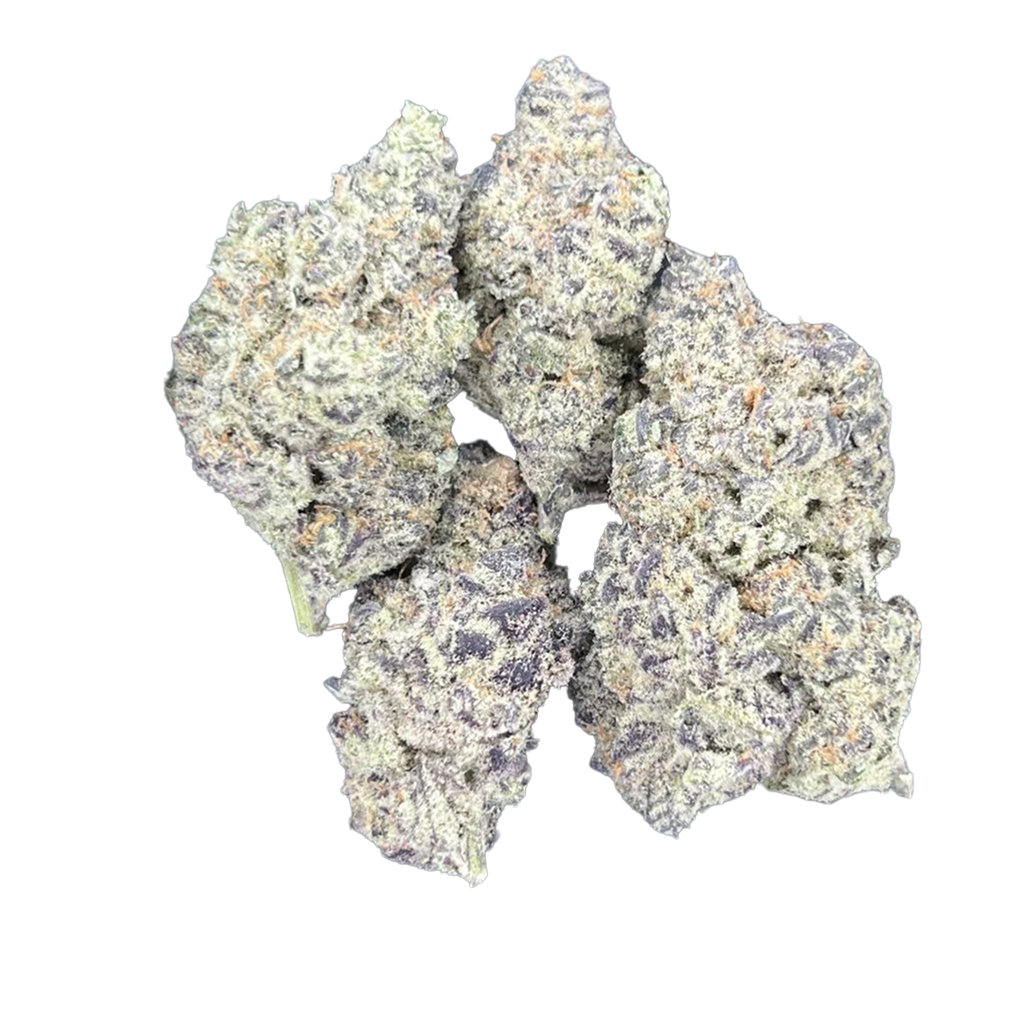
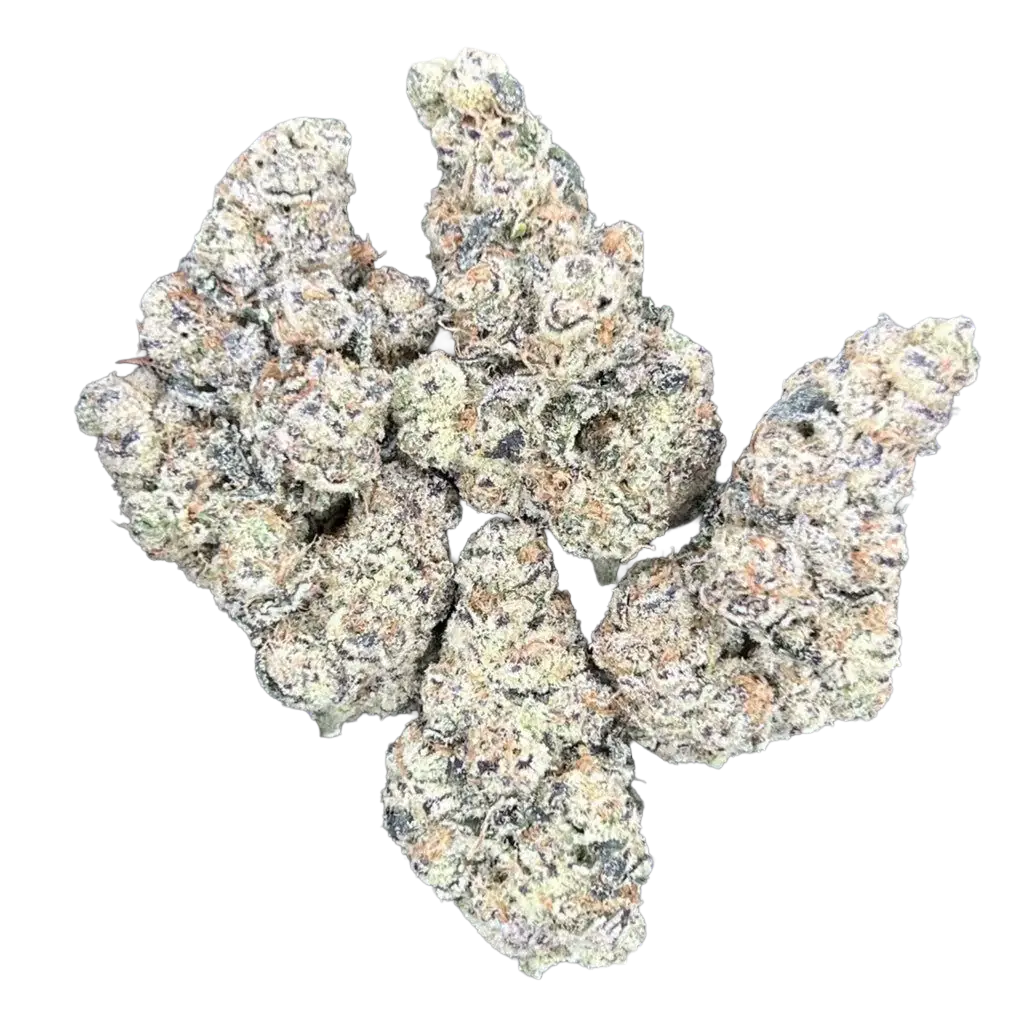
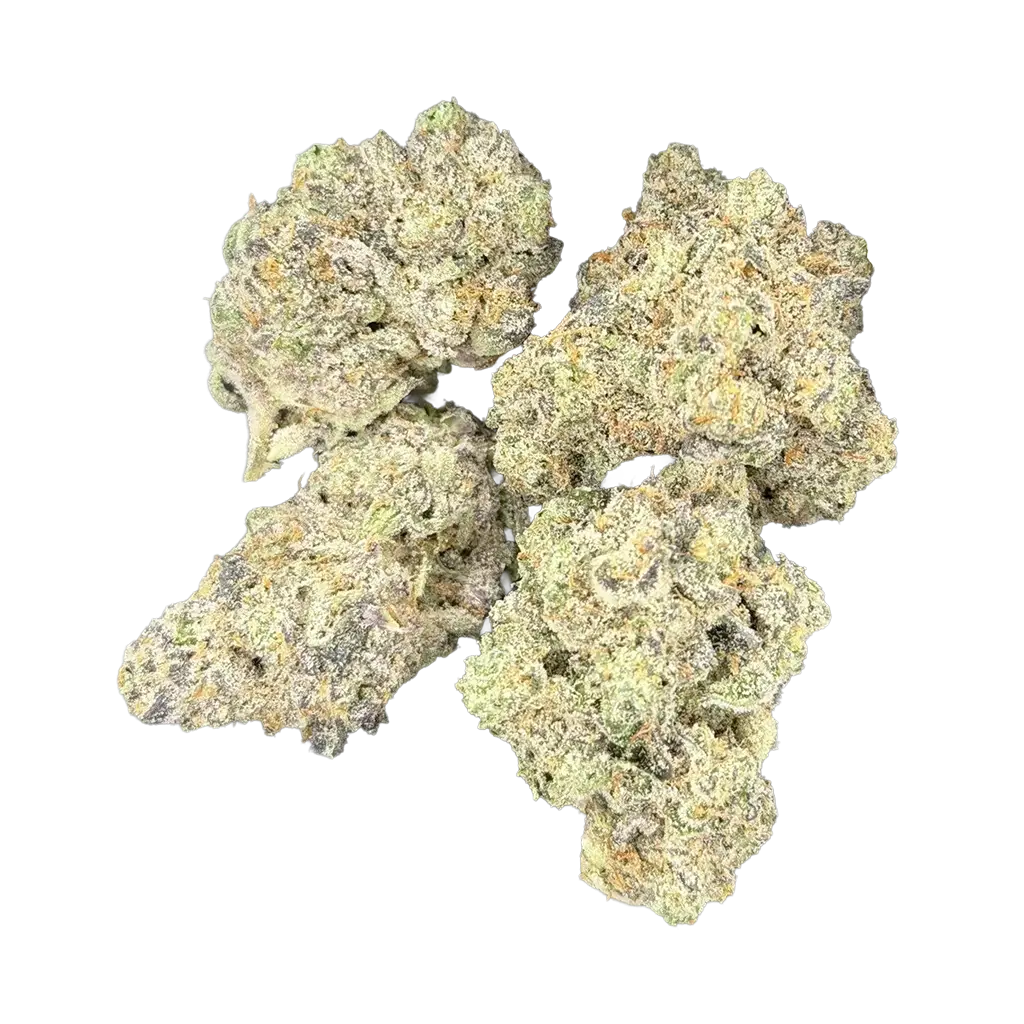
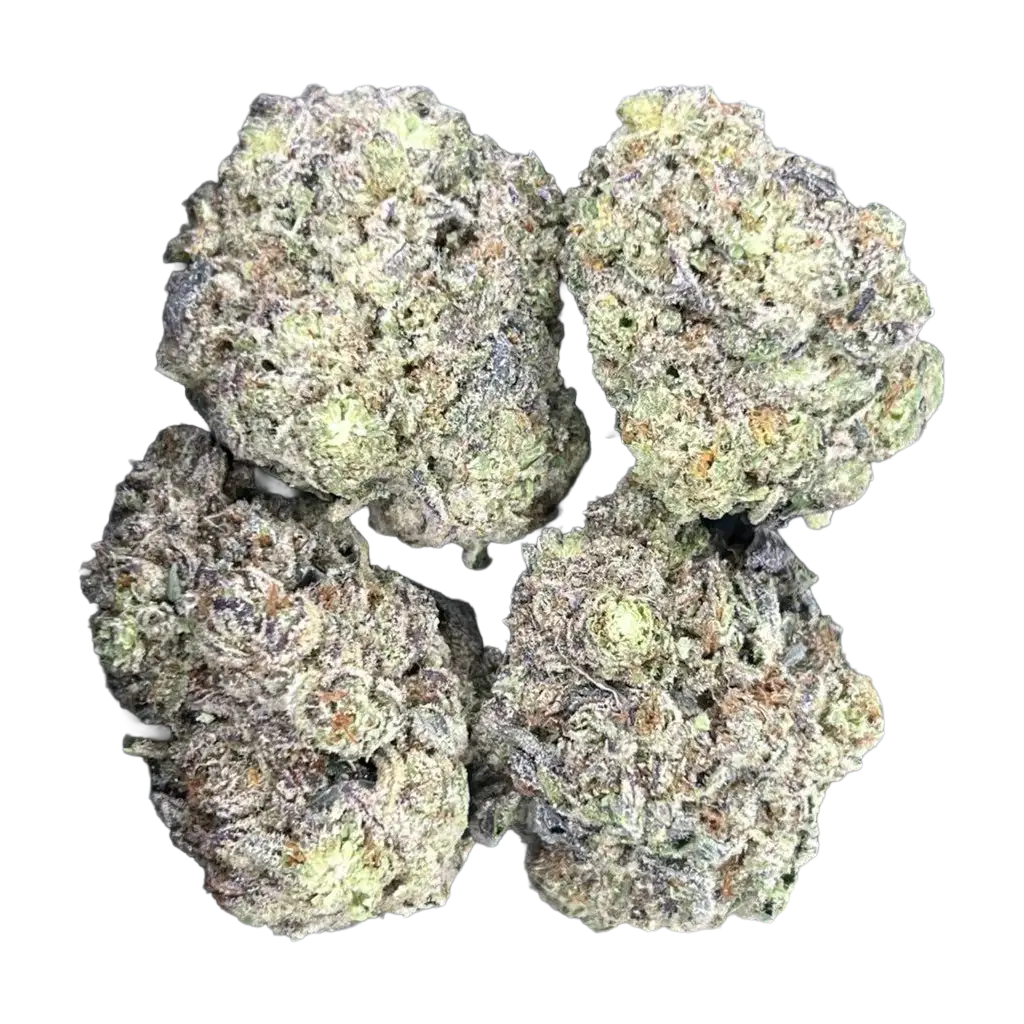
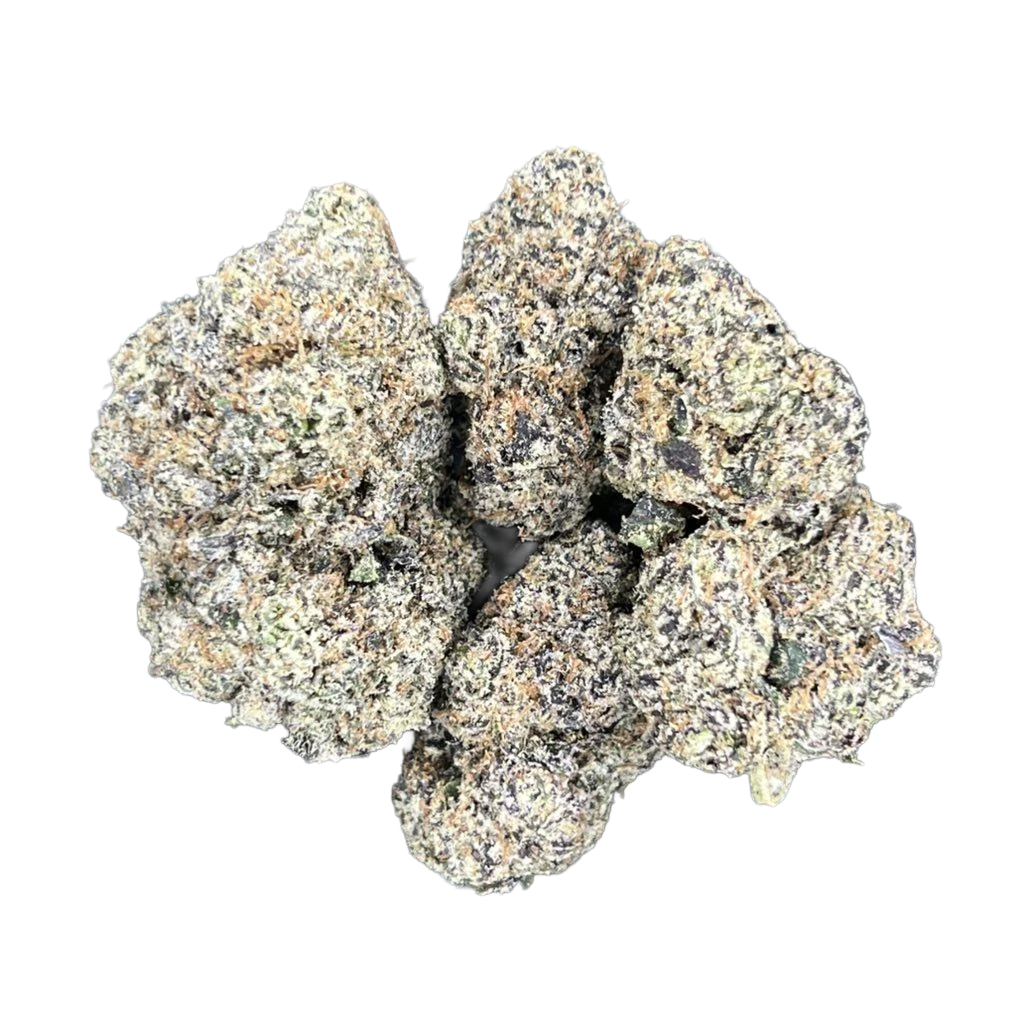
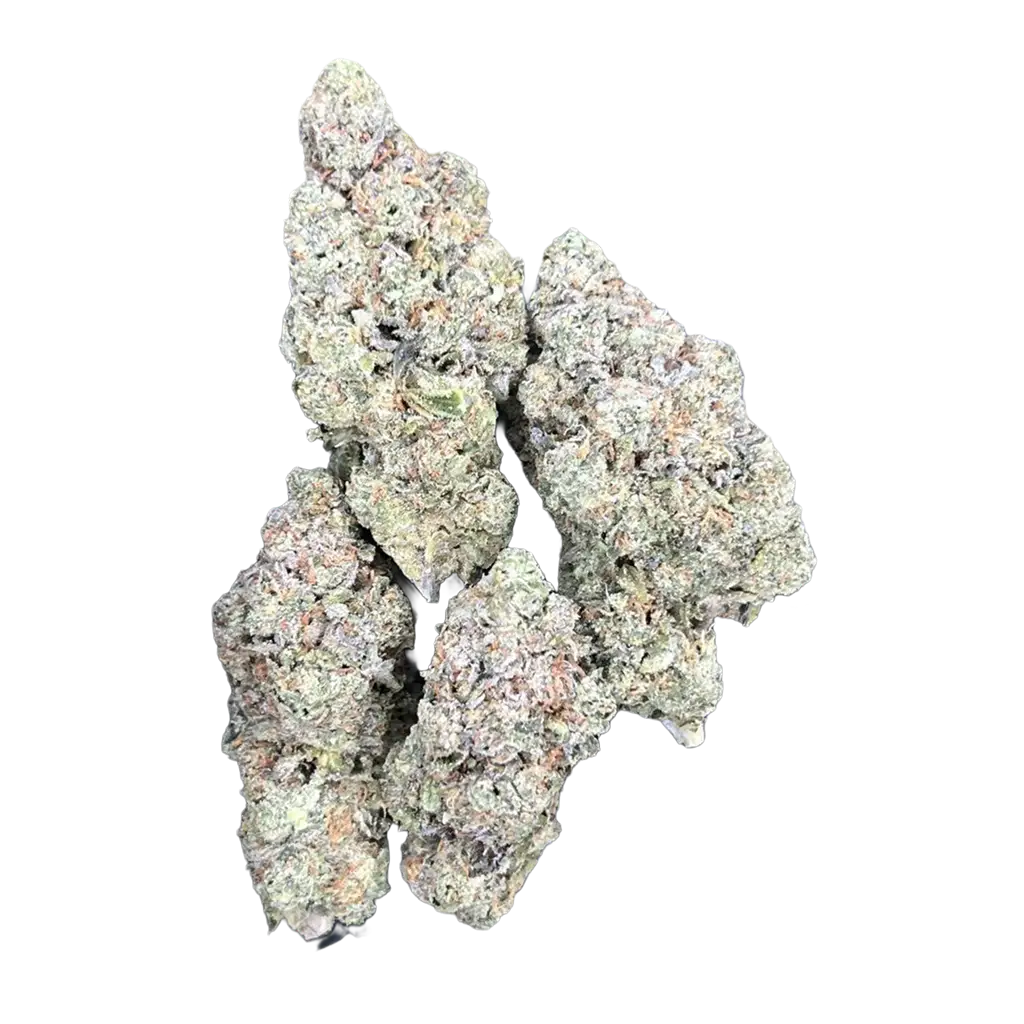
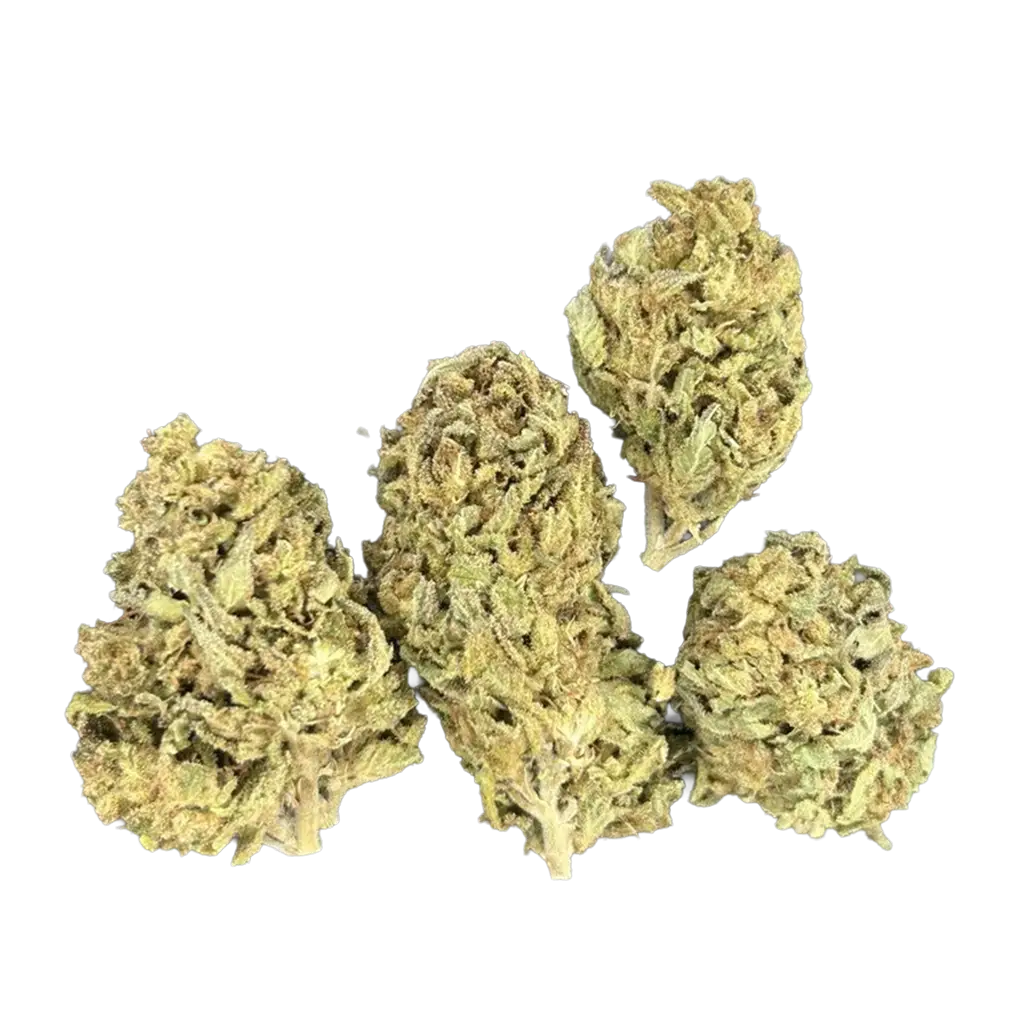
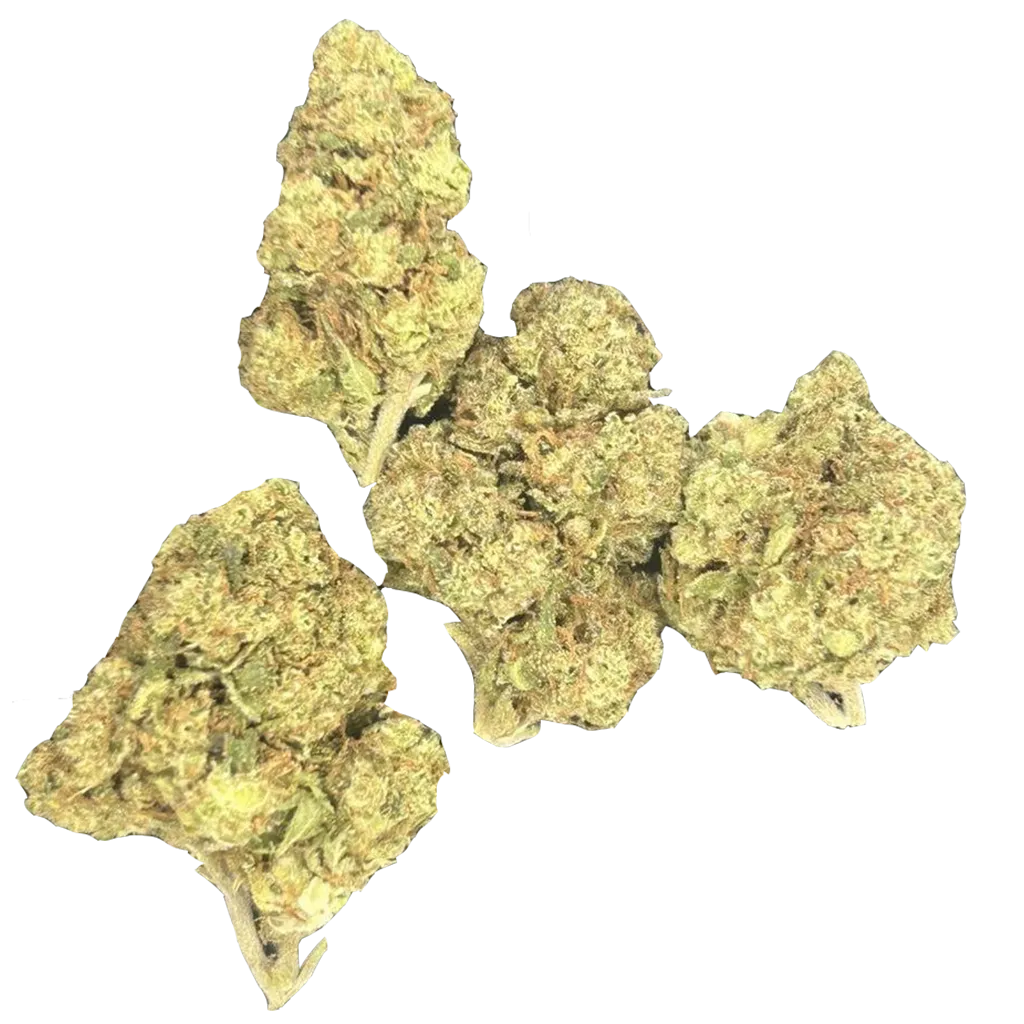
While newer cultivars enter the market every year, Cherry Pie has maintained steady demand because of its dependable flower quality and terpene profile. This review explores its genetics, aroma, potency, cultivation traits, and why it remains a valuable cultivar in today’s commercial cannabis market.
The Cherry Pie strain is a hybrid cannabis cultivar created by crossing Granddaddy Purple with Durban Poison. These two well-established genetics contribute distinct characteristics that have helped Cherry Pie remain one of the industry’s most recognizable cultivars. While many growers classify it as an indica-dominant hybrid, individual phenotypes can express slightly different growth patterns depending on breeding selections and cultivation methods.
Indoor cultivation typically produces compact plants with dense flower structure and consistent resin development, while greenhouse cultivation can encourage slightly taller growth with broader canopy expansion. Because phenotype expression varies naturally, experienced cultivators focus on maintaining stable environmental conditions throughout flowering rather than expecting every harvest to produce identical results.
Unlike many modern cultivars that compete primarily through exceptionally high THC percentages, Cherry Pie has built its reputation around overall flower quality. Commercial growers continue cultivating it because it delivers attractive bag appeal, dependable trichome production, and a terpene profile that remains popular across premium flower categories. Today, the Cherry Pie weed strain is commonly available as Premium THCA Flower, prerolls, concentrates, and bulk wholesale inventory, making it a reliable option for both retailers and commercial cannabis distributors.
The genetic background of any cannabis cultivar influences far more than its appearance. Growth structure, flowering time, terpene expression, resin production, and cannabinoid development all begin with stable genetics. Cherry Pie combines two highly respected parent cultivars that complement each other throughout cultivation and post-harvest processing, similar to the breeding approach behind Lemon Cherry Gelato.
Before exploring its cultivation performance, the table below summarizes the production characteristics most commonly associated with Cherry Pie across commercial cannabis facilities.
| Characteristic | Typical Commercial Range |
| Lineage | Granddaddy Purple × Durban Poison |
| Cultivar Type | Hybrid (commonly indica-dominant) |
| Typical THC | 18%-24% |
| Typical CBD | Below 1% |
| Dominant Terpenes | Myrcene, Caryophyllene, Limonene |
| Flowering Time | 8-9 Weeks |
| Indoor Yield | 350-450 g/m² |
| Outdoor Harvest | Late September-Early October |
Commercial testing frequently places THC concentrations between 18% and 24%, although environmental conditions, harvest timing, phenotype selection, and laboratory methodology can influence final cannabinoid results. Rather than focusing solely on maximizing THC percentages, experienced cultivators prioritize consistent cannabinoid development and stable terpene retention across every production cycle.
Granddaddy Purple contributes dense flower structure, colorful purple expressions under cooler flowering temperatures, and vigorous resin production. Durban Poison introduces stronger plant vigor, brighter terpene characteristics, and balanced growth throughout the vegetative stage. Together, these genetics create a cultivar capable of producing consistent commercial flower quality without sacrificing aroma, appearance, or cultivation efficiency.
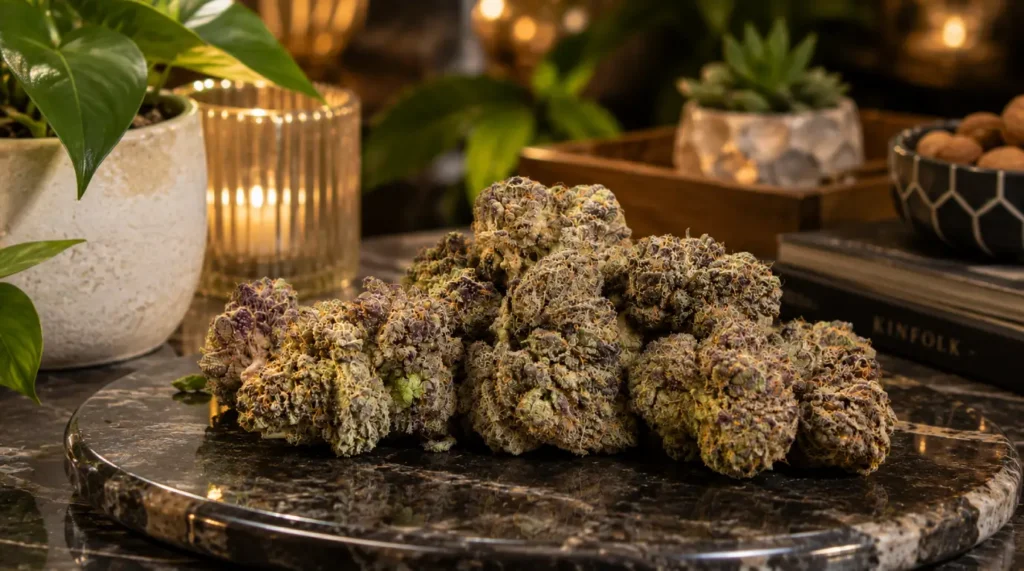
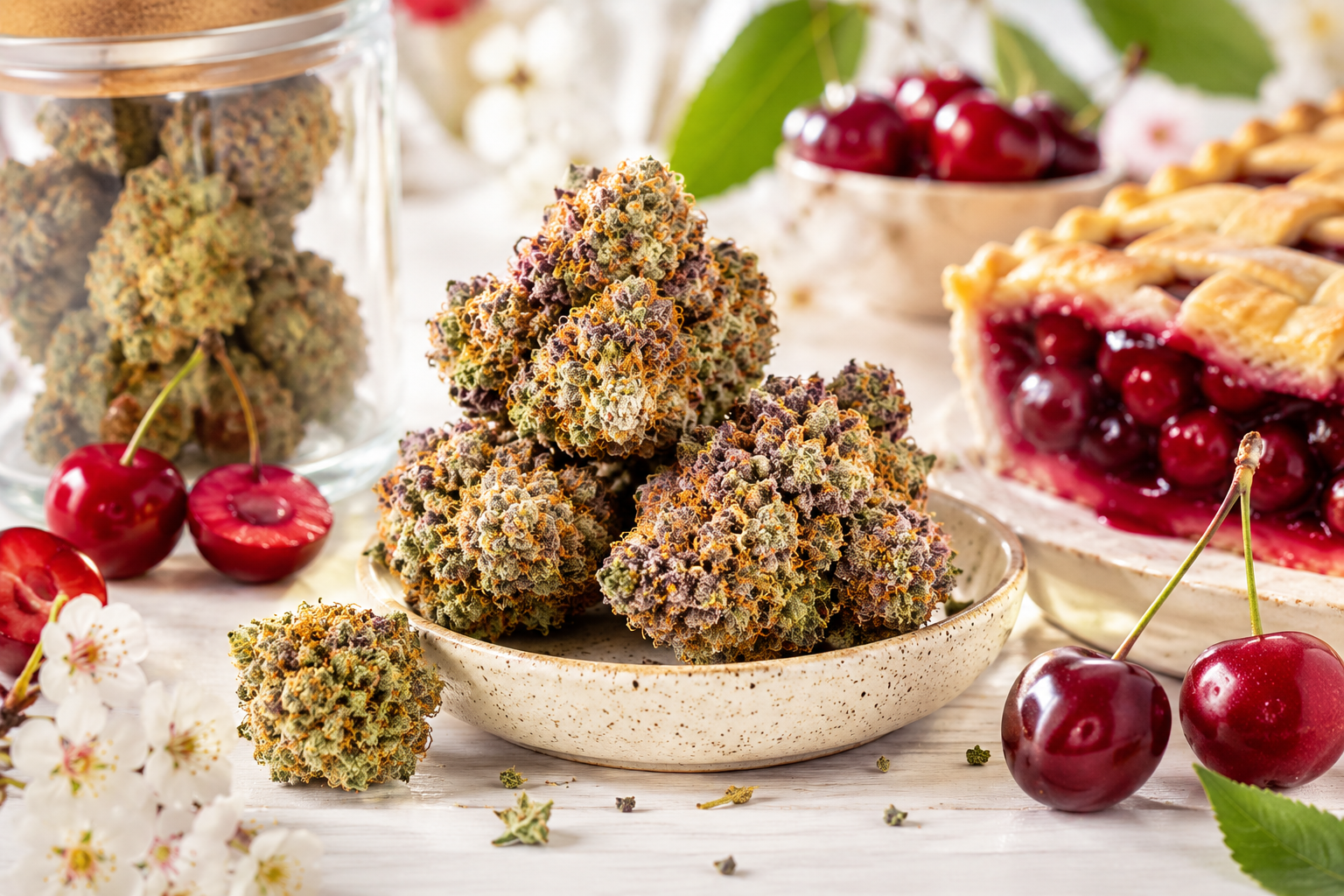
One of the biggest reasons the Cherry Pie strain has remained relevant in today’s cannabis market is its distinctive terpene profile. While potency often attracts initial attention, aroma and flavor are usually what encourage repeat purchases. Properly cured Cherry Pie flower delivers a layered sensory profile that combines sweet fruit notes with subtle earthy and herbal characteristics. Depending on the phenotype and post-harvest handling, some batches may also develop light berry, cookie, or spice-like undertones, much like Birthday Cake genetics.
Terpene expression can vary between cultivation facilities because drying conditions, curing time, harvest maturity, and storage methods all influence the final aromatic profile. Commercial buyers, therefore, evaluate aroma consistency alongside cannabinoid testing and visual presentation when sourcing premium flower inventory.
Myrcene is generally the dominant terpene in Cherry Pie and contributes to the cultivar’s earthy sweetness with subtle herbal notes. It plays a significant role in shaping the strain’s overall aroma profile.
Caryophyllene introduces mild pepper and spice characteristics that help balance the sweeter fruit-forward profile. It is one of the most frequently identified terpenes in commercial cannabis cultivars.
Although usually present in smaller concentrations, limonene adds light citrus brightness that complements Cherry Pie’s signature cherry aroma while contributing additional complexity after proper curing.
Before examining the commercial value of the cultivar, the table below summarizes its commonly reported sensory characteristics.
| Attribute | Typical Profile |
| Primary Aroma | Sweet Cherry |
| Secondary Notes | Earthy, Herbal |
| Supporting Notes | Berry, Cookie, Light Spice |
| Dominant Terpenes | Myrcene, Caryophyllene, Limonene |
| Resin Production | Moderate to High |
| Flower Density | Medium to Dense |
Commercial laboratory reports commonly show:
Commercial cannabis buyers often evaluate terpene consistency because aroma stability can directly influence shelf appeal, customer satisfaction, and repeat purchasing across premium flower categories.
The Cherry Pie strain effects are often described as balanced, making the cultivar appealing to experienced cannabis consumers looking for a hybrid profile rather than an extremely one-sided experience. Most commercial batches test between 18% and 24% THC, placing Cherry Pie within the moderate-to-high potency range without consistently reaching the cannabinoid percentages found in some newer cultivars.
Instead of focusing only on THC levels, commercial cannabis professionals usually consider how cannabinoids and terpenes work together to create the cultivar’s overall profile. This broader perspective provides a more realistic understanding of flower quality than cannabinoid percentages alone.
Consumers and dispensary buyers looking for Exotic THCA Flower commonly associate Cherry Pie with:
Individual experiences naturally vary based on tolerance, dosage, consumption method, and phenotype expression. Because of these variables, commercial operators generally describe the Cherry Pie strain effects using measurable cultivation and laboratory characteristics instead of making broad experiential claims.
One of the most common questions surrounding Cherry Pie is whether it should be classified as a sativa or an indica. The simple answer is that it is neither exclusively. Most commercial breeders classify Cherry Pie as an indica-dominant hybrid, although individual phenotypes may express characteristics inherited from either parent depending on cultivation practices and breeding selections.
Granddaddy Purple contributes compact growth, dense flower formation, and colorful purple expressions under cooler flowering temperatures. Durban Poison introduces stronger plant vigor, balanced branching, and brighter terpene characteristics. Together, these genetics create a cultivar capable of producing dependable commercial flower quality while maintaining a balanced growth structure.
Rather than focusing solely on the Cherry Pie strain sativa or indica debate, understanding Hybrid vs Indica genetics provides better context for evaluating phenotype expression. These characteristics have a much greater influence on commercial value than the traditional indica-versus-sativa classification, particularly when producing flower for premium retail and wholesale cannabis markets.
The Cherry Pie cannabis strain has remained commercially relevant for years because it delivers more than recognizable genetics. Wholesale buyers often evaluate cultivars based on production efficiency, post-harvest consistency, shelf appeal, and inventory turnover rather than THC percentages alone. Cherry Pie continues meeting those expectations by producing dense flowers, dependable trichome coverage, and a terpene profile that appeals to a broad range of cannabis consumers.
Commercial cultivation also benefits from the strain’s relatively predictable flowering cycle and manageable plant structure, making it suitable for THCA Disposables, premium flower, and concentrate production. When grown under stable environmental conditions, Cherry Pie consistently produces flowers suitable for multiple retail categories, including premium flower, prerolls, concentrate extraction, and bulk cannabis distribution.
Some of the qualities that continue making Cherry Pie commercially attractive include:
Unlike many newly released cultivars that gain short-term popularity, Cherry Pie has maintained long-term demand because it offers dependable production characteristics alongside an established market reputation.
Successful cultivation depends on much more than genetics. Environmental management, canopy development, irrigation scheduling, and post-harvest handling all influence the final quality of Cherry Pie flowers. Although the cultivar is considered moderately manageable by experienced growers, maintaining stable environmental conditions throughout flowering remains essential for consistent commercial production.
Before planning production, cultivators often compare the operational characteristics below to determine whether Cherry Pie fits their facility and production goals.
| Cultivation Attribute | Typical Commercial Performance |
| Growing Difficulty | Moderate |
| Preferred Climate | Warm, Low Humidity |
| Indoor Flowering Time | 8-9 Weeks |
| Outdoor Harvest Window | Late September-Early October |
| Indoor Yield | 350-450 g/m² |
| Outdoor Yield | 400-600 g per plant |
| Plant Height | Medium |
| Trichome Production | Moderate to High |
Commercial growers typically monitor several production variables throughout flowering:
Consistent temperature, humidity, and airflow help reduce environmental stress while supporting uniform flower development across the canopy.
Pruning lower growth and maintaining balanced light penetration encourages improved airflow while helping flowers mature more evenly throughout the plant.
Proper drying and curing remain equally important. Even a well-grown Cherry Pie flower can lose aroma, terpene quality, and shelf appeal if post-harvest conditions are poorly managed.
Because of its balanced cultivation characteristics, Cherry Pie continues to appear in commercial production schedules across both indoor facilities and controlled greenhouse operations.
Conclusion
The Cherry Pie strain continues earning its place within today’s cannabis market because it combines dependable genetics, balanced potency, and consistent commercial performance. Rather than relying solely on high THC percentages, the cultivar remains popular because growers, distributors, and retailers value its stable flower quality, recognizable aroma, and reliable production characteristics across multiple cannabis categories.
Whether evaluating genetics, terpene expression, cultivation performance, or wholesale potential, Cherry Pie remains a well-rounded hybrid that has stood the test of time. As premium cannabis markets continue evolving, cultivars that consistently deliver quality and operational reliability will remain in demand. Businesses looking for dependable cannabis products and carefully selected premium flower can continue exploring trusted options through TerpSourced.
The Cherry Pie strain is best known for its sweet cherry-like aroma, balanced hybrid genetics, and dependable flower quality. Created from Granddaddy Purple and Durban Poison, it has remained popular among both consumers and commercial growers because it combines attractive bag appeal with a consistent terpene profile and moderate-to-high THC levels.
Cherry Pie is generally classified as an indica-dominant hybrid, although its exact characteristics can vary between phenotypes. The Granddaddy Purple lineage contributes dense flower structure, while Durban Poison adds growth vigor and brighter terpene expression, creating a balanced hybrid rather than a purely indica or sativa cultivar.
Most commercial batches of the Cherry Pie weed strain test between 18% and 24% THC, although cannabinoid percentages may vary depending on cultivation practices, harvest timing, phenotype selection, and laboratory testing methods. CBD levels usually remain below 1%.
Cherry Pie is widely recognized for its sweet cherry aroma layered with earthy, herbal, and light spice notes. Depending on cultivation and curing practices, some phenotypes may also develop subtle berry or cookie-like characteristics that add complexity to the overall terpene profile.
The Cherry Pie cannabis strain is commonly associated with three dominant terpenes:
Together, these compounds help create the cultivar’s signature aroma and flavor profile.
Under controlled indoor conditions, Cherry Pie generally flowers within 8 to 9 weeks. Outdoor harvests are commonly completed between late September and early October, although the exact timing depends on regional climate, cultivation practices, and phenotype expression.
Yes. Cherry Pie remains a reliable commercial cultivar because it offers stable flowering times, attractive flower structure, consistent resin production, and broad consumer recognition. These characteristics make it suitable for premium flower, prerolls, concentrate extraction, and wholesale cannabis distribution across regulated markets.
Cherry Pie is considered a moderate-yielding cultivar. Indoor production commonly ranges between 350 and 450 g/m², while healthy outdoor plants may produce approximately 400 to 600 grams per plant when grown under favorable environmental conditions and proper cultivation management.
Unlike many cultivars that experience short-lived popularity, Cherry Pie has maintained steady demand because it consistently delivers balanced potency, recognizable genetics, dependable terpene expression, and reliable flower quality. Its long-standing reputation has helped it remain relevant across both retail dispensaries and wholesale cannabis markets despite the introduction of newer genetics.