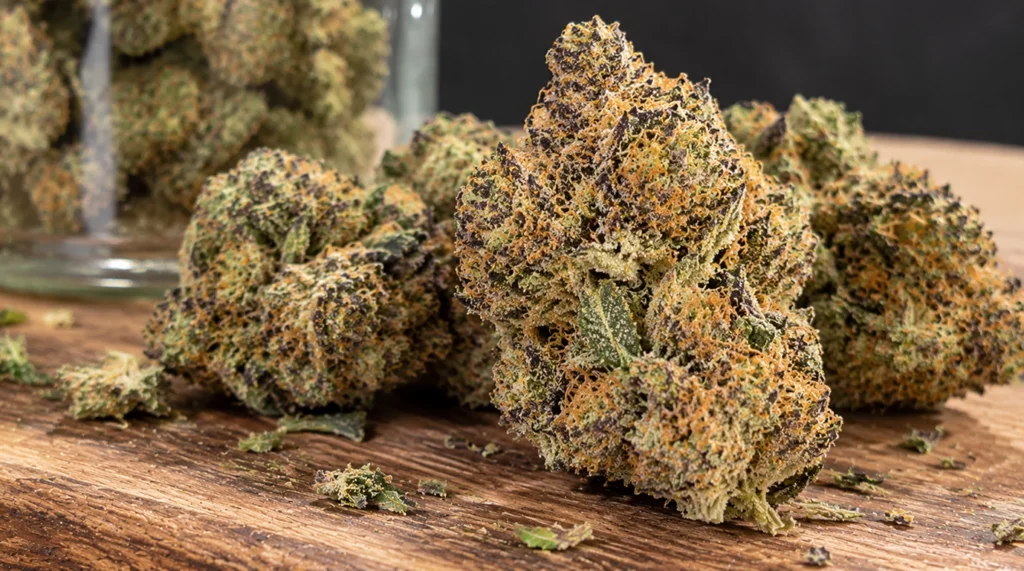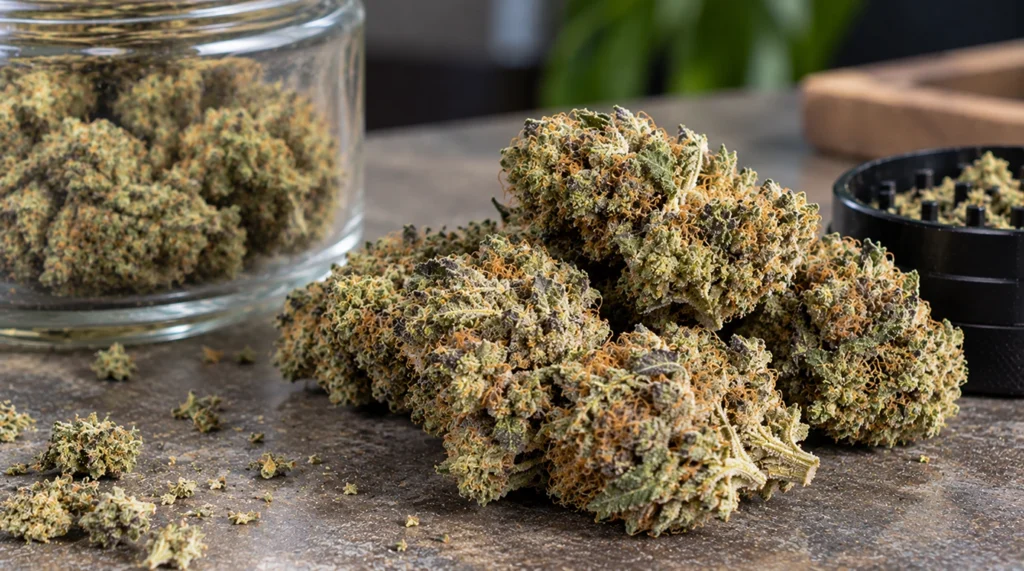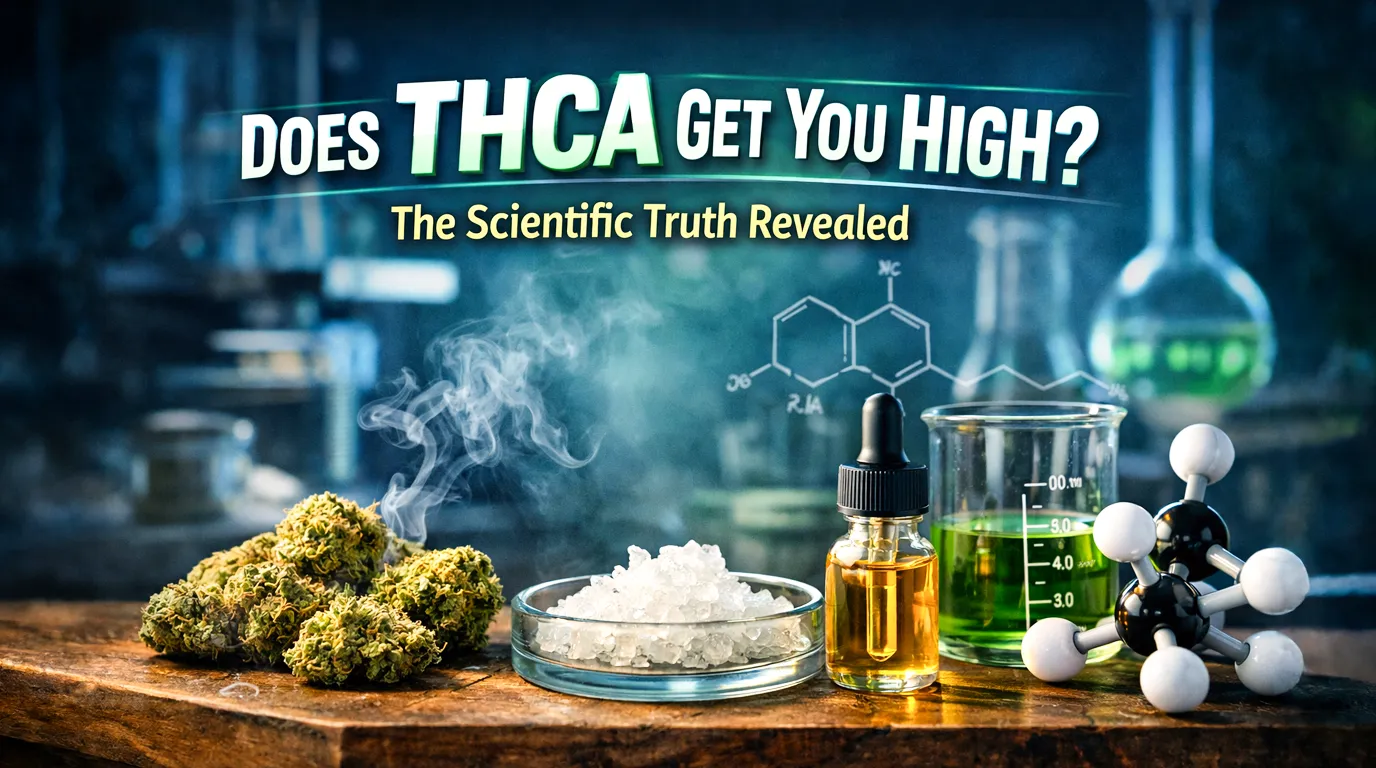
You are wondering: does THCA get you high? It is the million-dollar question in the modern cannabis scene, and the answer is a fascinating biological “maybe.” You see, THCA, short for tetrahydrocannabinolic acid, is the raw, sophisticated precursor to the THC everyone knows. But what makes your brain go high…?
Here’s what makes it tricky: THCA and THC are chemically related, but they behave very differently depending on how you use them. Raw THCA won’t get you high. Heated THCA absolutely will. That one detail changes everything about how you should buy, use, and understand this cannabinoid.
This guide breaks down the science clearly, so you walk away knowing exactly what THCA does, when it becomes psychoactive, and how to make informed choices. Let’s dig into the “high”-ness of it.
THCA stands for tetrahydrocannabinolic acid. It is the raw, unactivated form of THC found naturally in the cannabis plant. Fresh, undried cannabis contains almost no THC at all. Instead, it is loaded with THCA.
Think of THCA as THC’s sleeping form. It exists in abundance in living cannabis plants, but it hasn’t been “switched on” yet. That switch gets flipped when heat enters the picture.
THCA was first identified in 1995, and research into its unique properties has grown significantly since then. Scientists now recognize it as the most concentrated cannabinoid in freshly harvested cannabis.
Short answer: Raw THCA does not get you high. But when heated, it converts to THC and becomes psychoactive.
This is the question that trips up even experienced cannabis users. The answer depends entirely on one thing: temperature.
In its natural, acidic state, THCA cannot bind effectively to the CB1 receptors in your brain. Those receptors are what THC activates to produce the classic cannabis “high.” Without that binding, there’s no intoxication.
So if you consumed raw cannabis flower in a smoothie or juiced it fresh, you’d get THCA but not a high. The moment you smoke it, vape it, or cook it at the right temperature, the story changes completely.
The process that converts THCA into THC is called decarboxylation. Here’s what happens chemically:
THCA has an extra carboxyl group attached to its molecular structure. When exposed to heat, that carboxyl group breaks off as carbon dioxide (CO₂). What remains is THC, the compound that attaches to CB1 receptors and produces psychoactive effects.
How decarboxylation happens in practice:
This is why THCA percentages on lab reports matter when you’re buying flowers. A product with 25% THCA will deliver roughly 20–22% THC after smoking, accounting for some conversion loss during combustion.
| Feature | THCA | THC |
| Psychoactive? | No (raw form) | Yes |
| Found naturally in plants? | Yes (primary form) | Trace amounts only |
| Activates CB1 receptors? | Weak binding | Strong binding |
| Converted by heat? | Yes, becomes THC | Already active |
| Legal status (federally)? | Hemp-derived: often legal | Schedule I controlled substance |
| Potential therapeutic use? | Anti-inflammatory, neuroprotective | Pain relief, appetite, anxiety |
If you consume THCA without applying heat, you won’t experience a high. But that doesn’t mean nothing happens in the body.
Research suggests raw THCA may interact with the endocannabinoid system in gentler, non-intoxicating ways. Early studies point to several potential benefits:
These effects are mild and subtle compared to THC. They don’t produce euphoria. But they do suggest THCA has therapeutic value beyond simply being a precursor to THC.
Raw cannabis juicing is one growing practice where users intentionally keep THCA unheated to explore these non-psychoactive effects.
This is where things get nuanced. Under the 2018 Farm Bill, hemp-derived cannabinoids with less than 0.3% Delta-9 THC are federally legal. THCA extracted from hemp technically fits this framework because it isn’t THC in its pre-heated state.
However:
Always check your state’s current laws before purchasing or using THCA products. The legal landscape is shifting, and what’s permitted in one state may not be in another.
People often compare THCA to CBD since both are non-intoxicating in their natural forms. Here’s how they differ:
If you want zero psychoactive potential under any circumstances, CBD is the safer choice. If you’re interested in the full-spectrum experience including the option to activate THC through heating, THCA products are more relevant to you.
Yes. THCA flower, when smoked or vaped, will get you high. This is one of the most important practical points for buyers to understand.
THCA flower looks and smells identical to traditional cannabis. It’s grown and harvested the same way. The difference is it’s derived from hemp and marketed based on its pre-activation THCA content rather than Delta-9 THC levels.
This is why THCA flower has become popular in states where traditional THC products remain inaccessible. Buyers get a comparable experience through a product that, before heating, technically contains minimal Delta-9 THC.
At TerpSourced, we believe that understanding what you’re putting in your body is just as important as the product itself. That’s the foundation everything we do is built on.
We source our products with full transparency, third-party lab testing on every batch, and a commitment to quality that doesn’t cut corners. Whether you’re exploring THCA for the first time or looking to stock up on trusted products, we’ve got you covered.
Some of what we carry:
We don’t just sell products. We help you understand what you’re buying, why it works, and how to use it safely. Because informed customers make better choices, and better choices lead to better experiences.
THCA is not THC, but it becomes THC the moment heat is applied. In its raw form, THCA is non-psychoactive and may offer subtle therapeutic benefits around inflammation, nausea, and neurological health. The second you smoke, vape, or cook it, decarboxylation kicks in and you’re dealing with active THC.
For buyers, this means THCA flower and concentrates will produce a high when used as intended. For wellness seekers exploring non-intoxicating cannabinoids, raw THCA has its own place in that conversation.
Now that you’ve got the real science behind it, let’s roll onto one at TrepSourced today!
Yes, it very likely will. Once THCA is consumed through smoking or vaping, it converts to THC and is metabolized into THC-COOH, the compound drug tests detect. Even if you believe you’re using a “legal” THCA product, the metabolites produced after activation are identical to those from traditional cannabis use.
No. Raw THCA does not bind strongly enough to CB1 receptors to produce intoxication. Consuming it through juicing or raw capsules will not get you high. You would need to decarboxylate it first, through smoking, vaping, or baking, to experience any psychoactive effects.
Lab reports list THCA and Delta-9 THC separately. THCA represents the potential THC once activated. A useful formula is: Total THC = (THCA x 0.877) + Delta-9 THC. This tells you the potency you can actually expect from smoking or vaping the product.
Yes. The safety profile when heated mirrors that of cannabis in general. As with any cannabinoid product, it’s worth consulting a healthcare provider if you have underlying conditions or take medications that interact with cannabis.
Because THCA is the primary cannabinoid in fresh hemp flowers, it naturally appears in high concentrations on lab tests. A product showing 22–28% THCA is not unusual. This number reflects how much THC the product can yield once smoked, not active THC sitting in the plant. It’s the grower’s way of signaling potency potential to the buyer.
Cap Junky is one of the most well-known strains in...
This is what makes the Sour Tangie strain so interesting....
The SFV OG strain is one of the OG cuts...



Sign up for exclusive wholesale offers, new product alerts, bulk pricing updates and more.

No spam. Unsubscribe anytime. ❤️