Very few strains get a name this straightforward. The flavor and aroma of Peanut Butter Breath are nutty and earthy, distinguishing itself in a marketplace that is dominated by confectionery strains. The strain has been developed by ThugPug Genetics using the crossing of Do-Si-Dos and Mendo Breath and enjoys an average rating of 4.6 stars from user reviews, along with wins at various cannabis cups.
This is what its genetics, terpenes, effects, and THCa profile really are.
Peanut Butter Breath is a hybrid cannabis strain that was bred by ThugPug Genetics by crossing Do-Si-Dos with a Mendo Breath F2 male. This strain was introduced back in 2016 and gained fame thanks to its peculiar flavor, which is not a typical one for those sweet and fruit-based strains that were prevalent in the market at the time.
This strain will be found under different names. The menus and strain directories use such abbreviations as Peanut Butter, Peanut Breath, and PB Breath, while most growers and buyers refer to it simply as PBB. When you are looking for the “peanut butter strain,” chances are high you are talking about this variety, which sits in the same premium tier as the rest of our bulk THCa flower lineup.
These claims have their justification. Peanut Butter Breath won third place at the 2018 Emerald Cup in the mixed-light category and first place in the indica category at the 2019 Karma Cup. In addition, its ice water hash turned out to be even more successful, winning second place at the 2019 Emerald Cup and first at WEEDCon 2020.
Below is a list of the most requested specifications that buyers and cultivators look for. Please take into account that the potency levels are not set in stone, as they may vary from batch to batch, which is why every entry in our strain catalog ships with its own lab results.
| Specification | Detail |
| Breeder | ThugPug Genetics |
| Lineage | Do-Si-Dos × Mendo Breath F2 |
| Type | Hybrid (leans relaxing) |
| THC range | 18-28% reported |
| Top terpenes | Limonene, caryophyllene, pinene |
| Flavors | Nutty, buttery, earthy, chestnut |
| Reported effects | Relaxed, sleepy, hungry |
| Flowering time | 8-10 weeks |
| Also known as | Peanut Butter, Peanut Breath, PB Breath, PBB |
This can be attributed to the fact that both the parents of Peanut Butter Breath originate from the OG Kush Breath strain, thus making the strain dense, sticky, and heavy despite differences in phenotypes.
That Girl Scout Cookies influence runs through a large share of the modern menu, which is why PBB shares distant ancestry with Gelato-derived cultivars such as Mega Runtz despite tasting nothing alike.
As ThugPug utilized the F2 male plant rather than the clone of Mendo Breath, the line never had stability across all of the packs. The original variety was released on the market as regular seeds and has never been made available as feminized ones. The current feminized and S1 varieties available on the market are bred by different growers working with this strain line.
Peanut Butter Breath can be considered a hybrid, but many consider it to be more on the indica side. The ratio is listed as 50/50 in several online sources, but those who deal with it directly claim that it produces a very relaxing effect.
There are good reasons for both descriptions. The ratio of 50/50 can be found in almost all strain profiles; at the same time, many of them indicate that users feel more of an indica effect. It was awarded as the Karma Cup winner in the indica category, and most buyers shelve it alongside their other indica strains. Even the breeder describes the structure as sativa-like and stretching, whereas the flowers are more indica-like.
The labeling is not even accurate to begin with. In a 2022 study by PLOS ONE involving almost 90,000 commercial products, samples labeled as “indica” had terpene profiles identical to those labeled as “sativa” or “hybrid.” This finding was replicated in a genetic study in Nature Plants. Don’t believe the category; read the COA.
The primary terpenes identified in Peanut Butter Breath are usually limonene, beta-caryophyllene, and pinene. Terpenes like myrcene and humulene come secondarily in the list for many batches.
The ranking order of these terpenes results from aggregated testing and corroborates with published batch COAs, one of which showed limonene present at 0.77%, beta-caryophyllene at 0.31%, alpha-pinene at 0.15%, and myrcene at 0.12%. Some retailers, on the other hand, list a caryophyllene-dominant profile. Both may be true, since terpene profiles vary depending on phenotype, growth, and curing environments.
Put side by side with a fruit-forward cultivar such as Blue Zangria, the contrast in terpene expression is immediate.
Most batches of the Peanut Butter Breath strain fall within the range of 18% to 28% THC, and the average that most reports give falls around 20%. This particular strain has a very wide percentage range, and the breeder has acknowledged this fact.
CBD content in the strain is usually low, at under 1%. CBG content is usually about 1%.
In terms of purchasing THCa flower, you should pay attention not to the THCa number but to the total THC. The latter is the sum of delta-9 THC and 0.877 times THCa. The coefficient 0.877 is used because weight is lost during the decarboxylation reaction of THCa into THC. This formula is applied by Texas in its compliance testing, and the federal government has also moved toward a total THC definition of hemp.
Three checks take about a minute:
Those three checks matter most when you are buying THCa flower pounds rather than sample quantities, because a single mislabelled lot scales into a full case of returns. The average strain value is marketing. The COA is evidence, and our compliance documentation explains what accompanies every lot.
There is no “peanut” terpene. It is the combined effect of several compounds: caryophyllene with its sharp taste of pepper, humulene and pinene with their woodiness, and limonene adding a hint of citrus over an earthy base.
The overall impression is savory rather than sweet, which is unique in its way. Critics unanimously call nutty, buttery, and chestnut the primary flavors of the terpene blend, with the nutty taste being the most prominent, followed by earthy and woody. Growers identify cedarwood and walnut as the main flavors in a jar, with earth and musk in the flower.
Across peanut butter breath strain reviews, the individual opinions tend to be more specific and diverse. One critic mentions a citrus-flavored buttery note. Another tried a sweet pine flavor over a roasted, nutty base, with garlic and mushroom adding a funky edge after grinding. Yet another confesses that sometimes it just smells of dirt.
This diversity is quite natural. The Peanut Butter Breath terpene blend is genuinely controversial, and those who enjoy it do so precisely because it is not another dessert strain like Candy Cartel.
Users most commonly report feeling relaxed, sleepy, and hungry, usually arriving in that order after a brief mental lift.
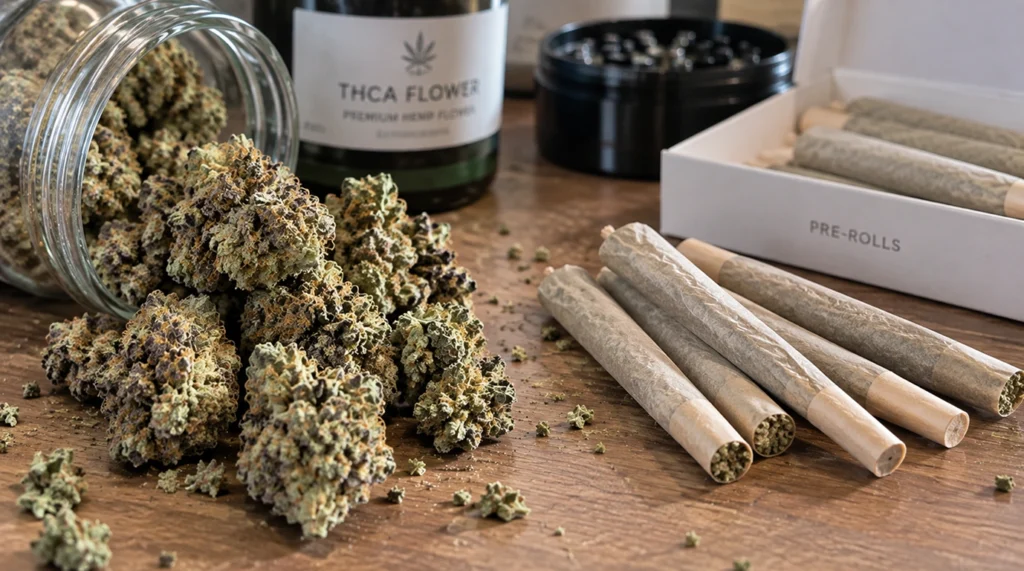
It usually begins cerebrally for the user. Critics note an initial feeling of elevation, which can verge on euphoria at times and make the user more relaxed before the physical effects begin to kick in. The higher the dose, the closer you get to couch lock. Many reviewers note that this strain is a “creeper” that arrives in two stages, which is one reason measured formats such as THCa pre-rolls suit it well.
Appetite stimulation is reported in every single source reviewed.
The negatives that come up most often are:
The breeder knows this too, and those who have taken it in large quantities can testify that the anxiety is genuine.
Survey results from users show people using it for anxiety, stress, and even pain. This information is based on self-reports and cannot be used in place of professional guidance.
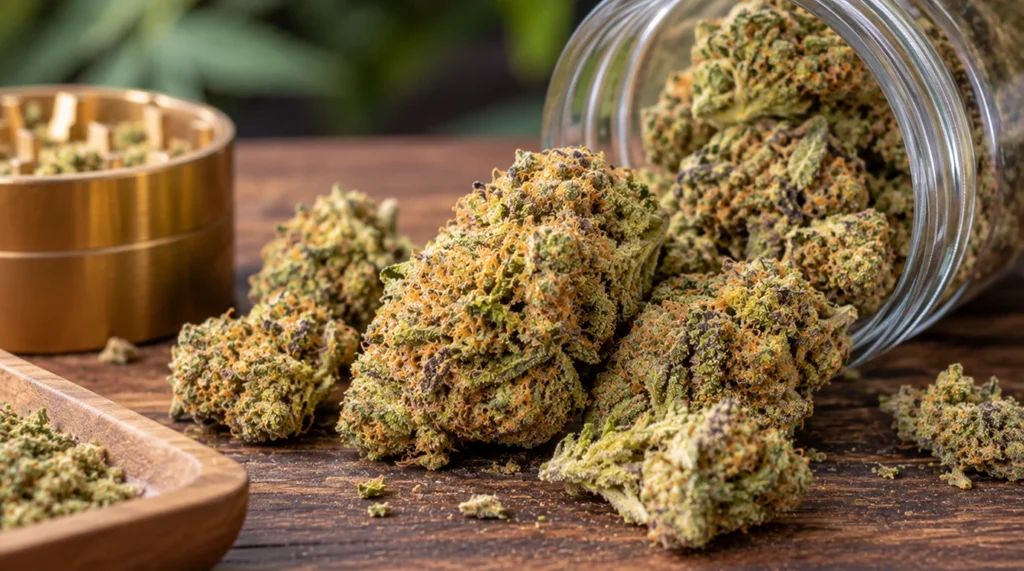
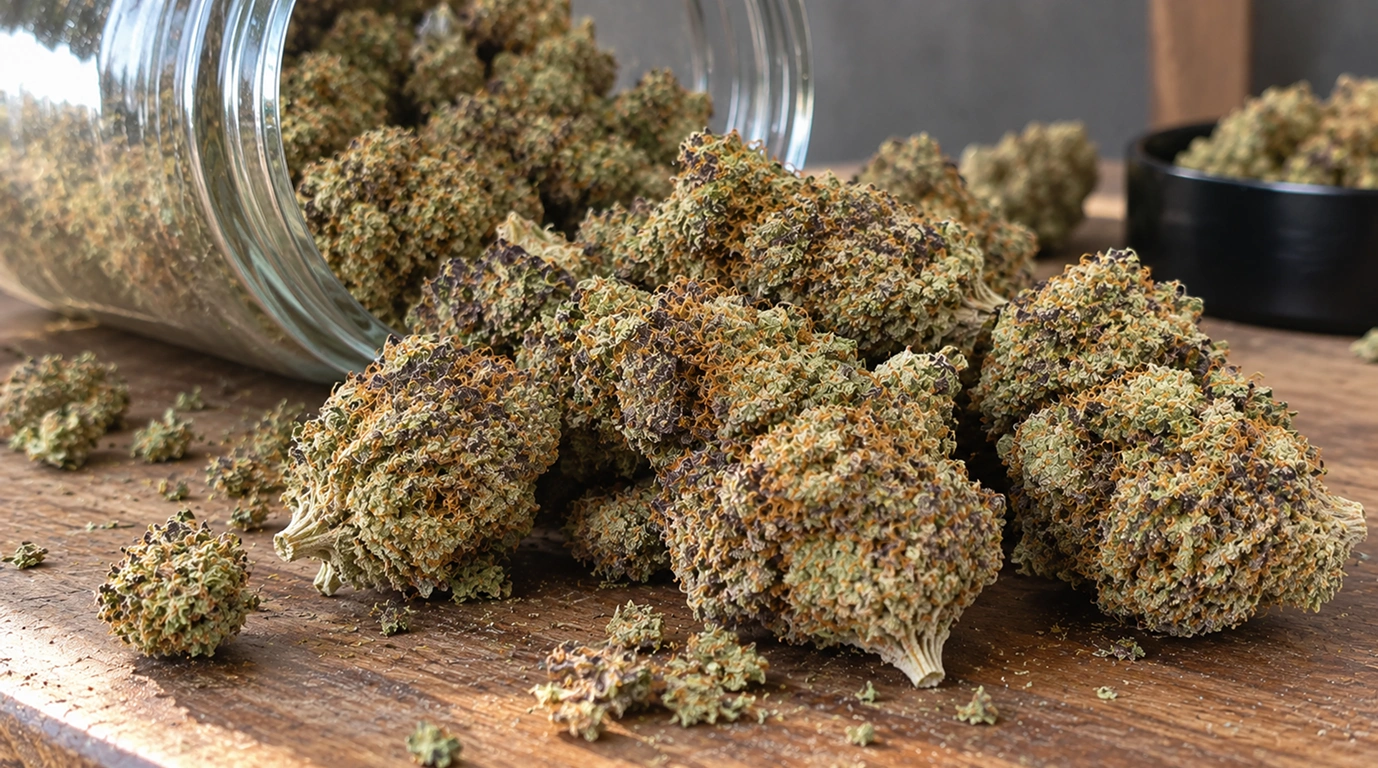
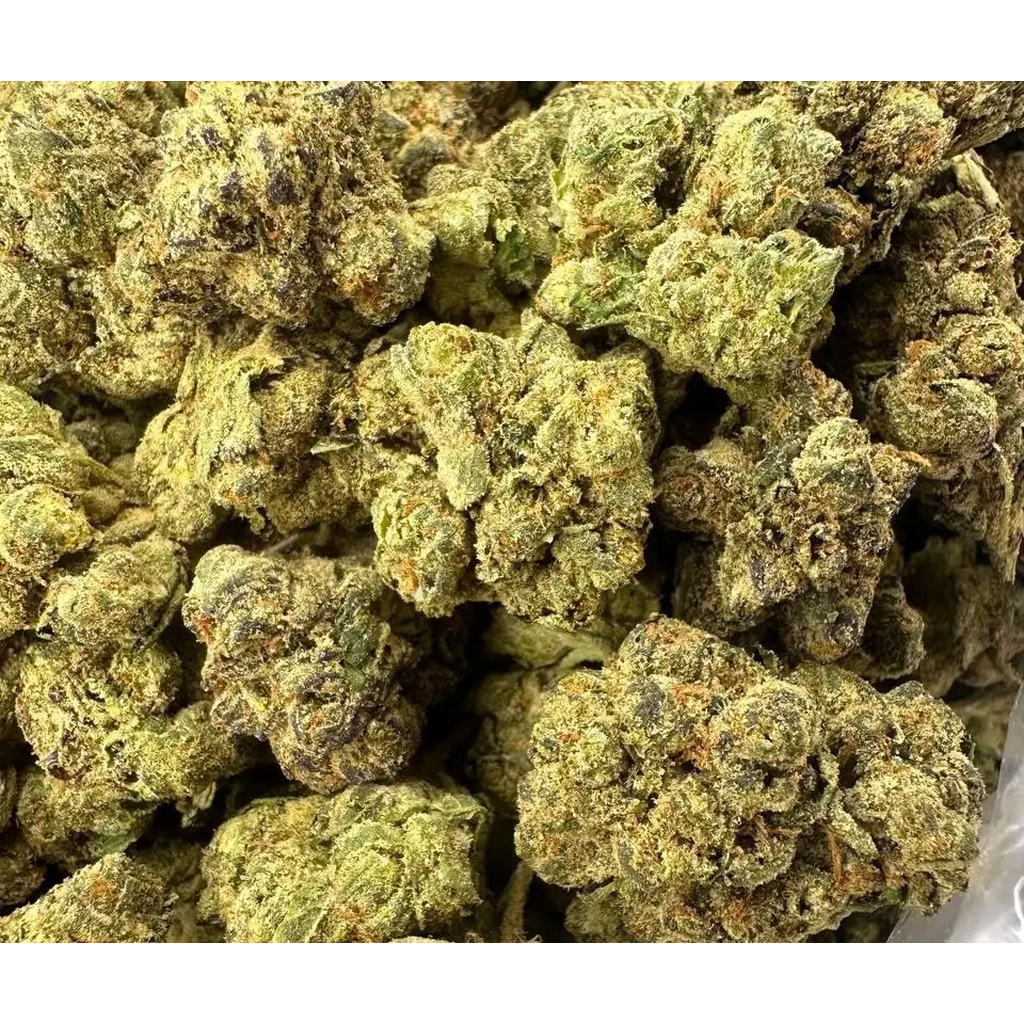
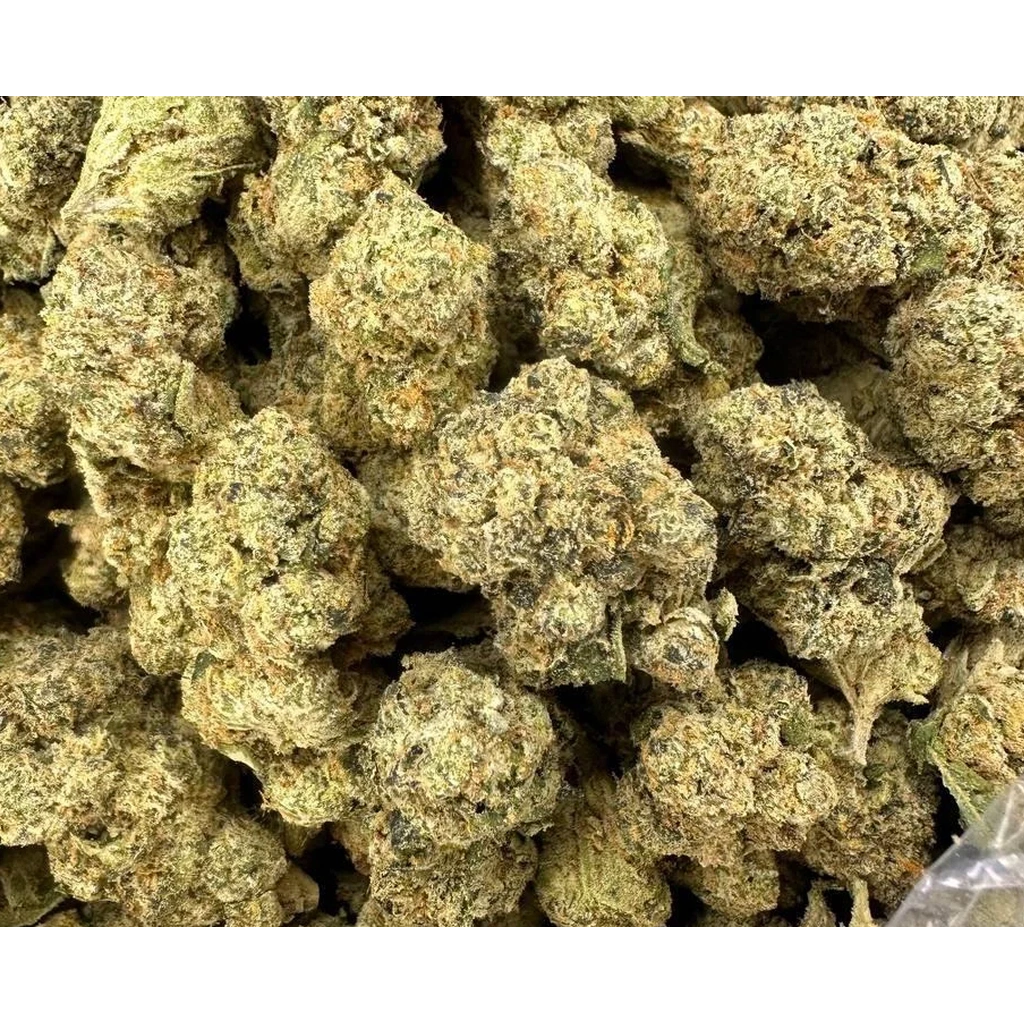
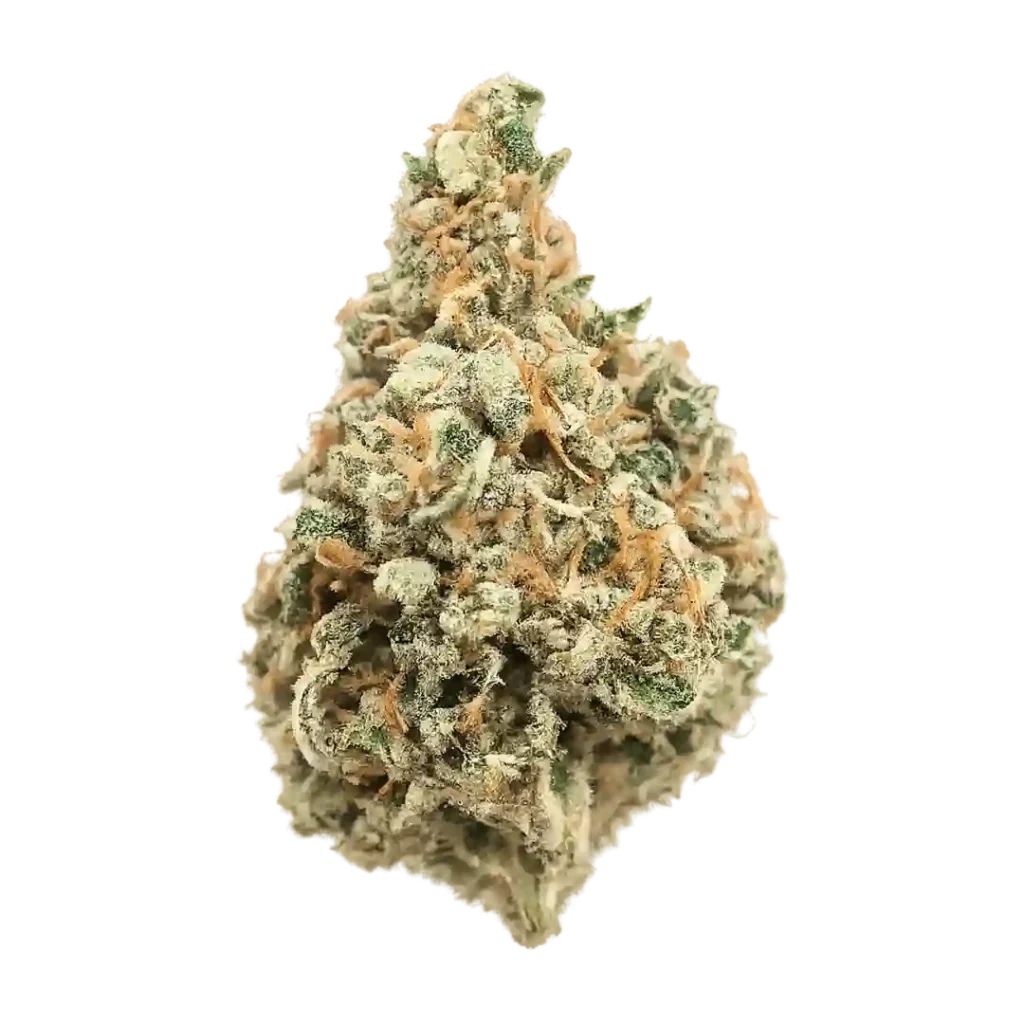
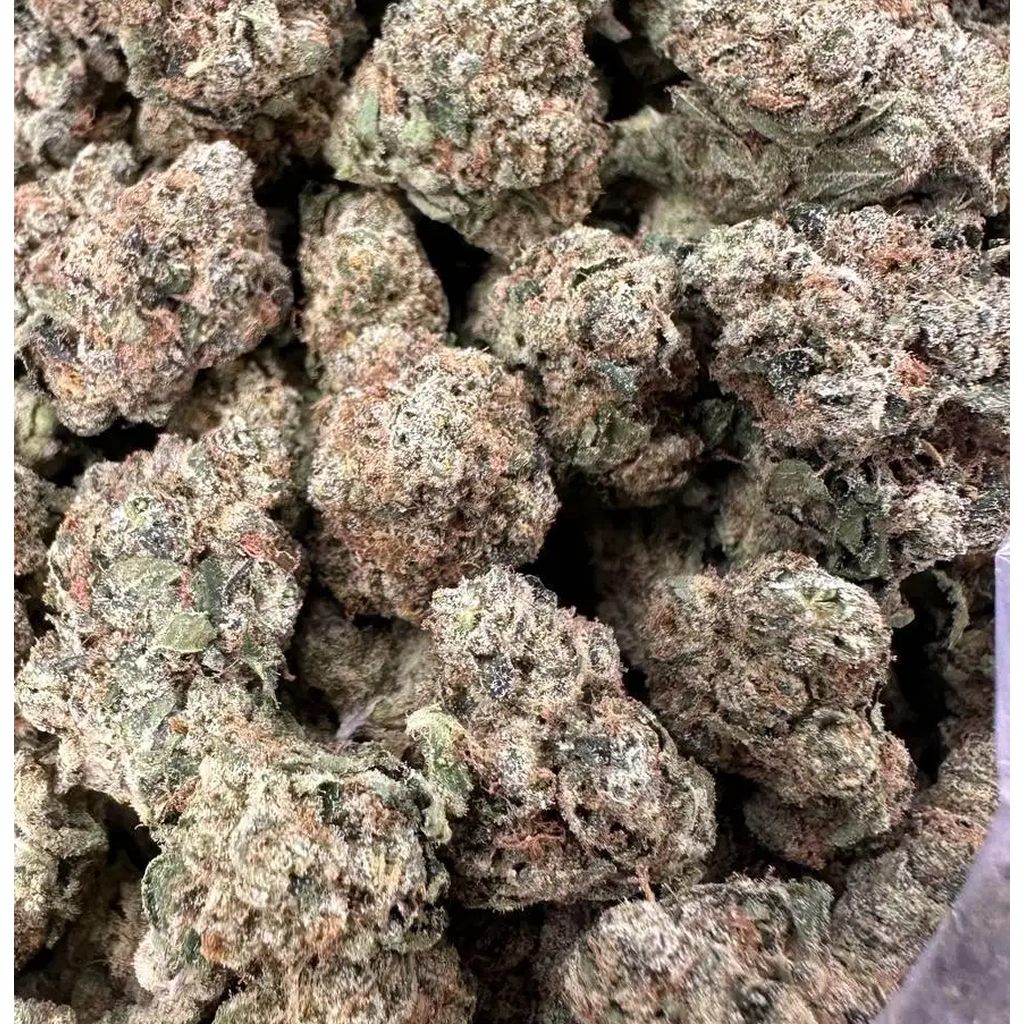
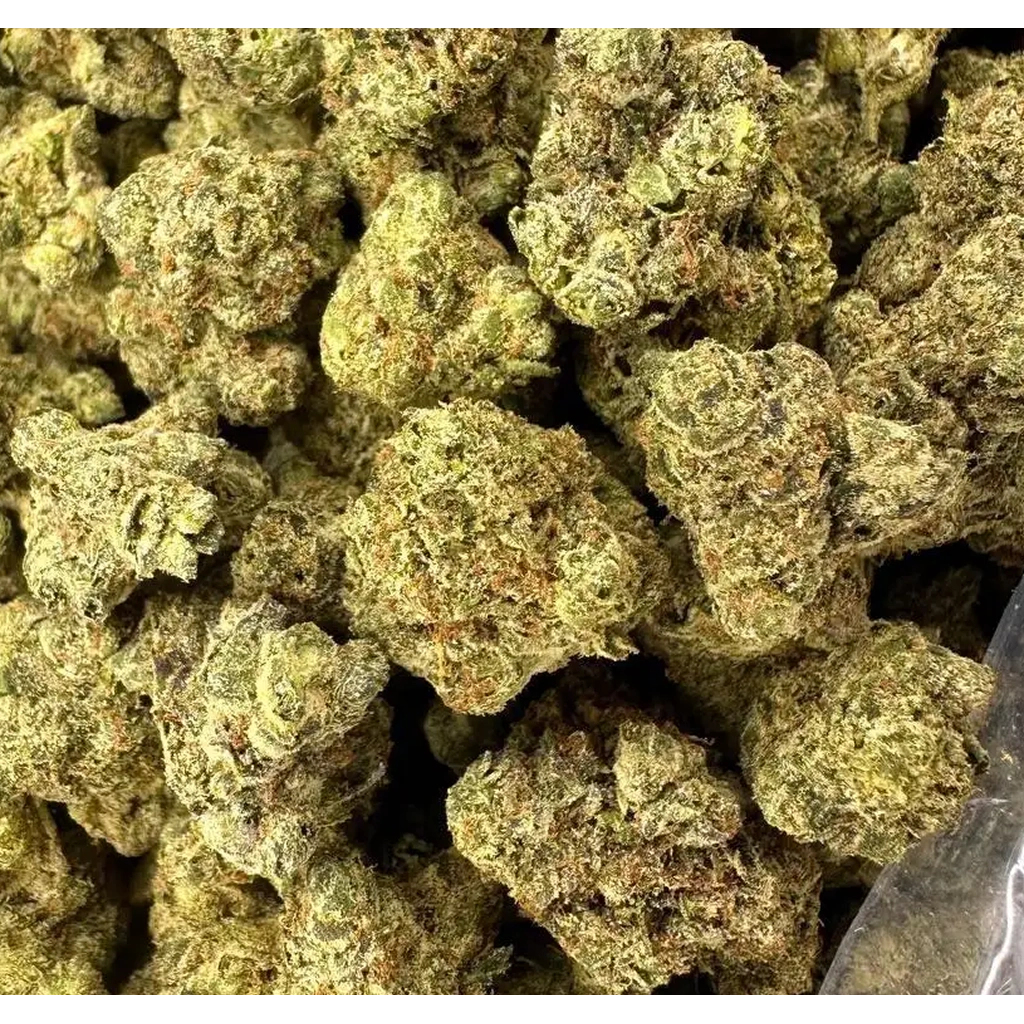
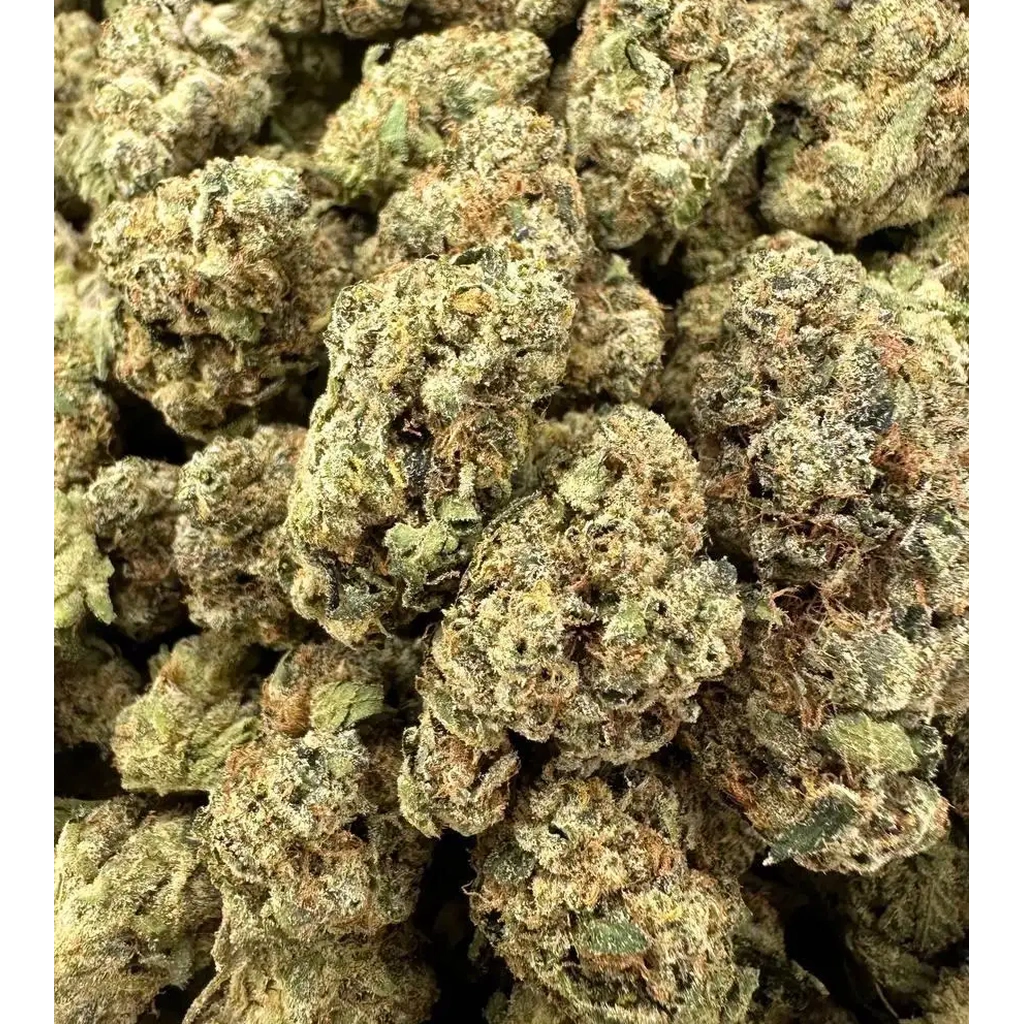
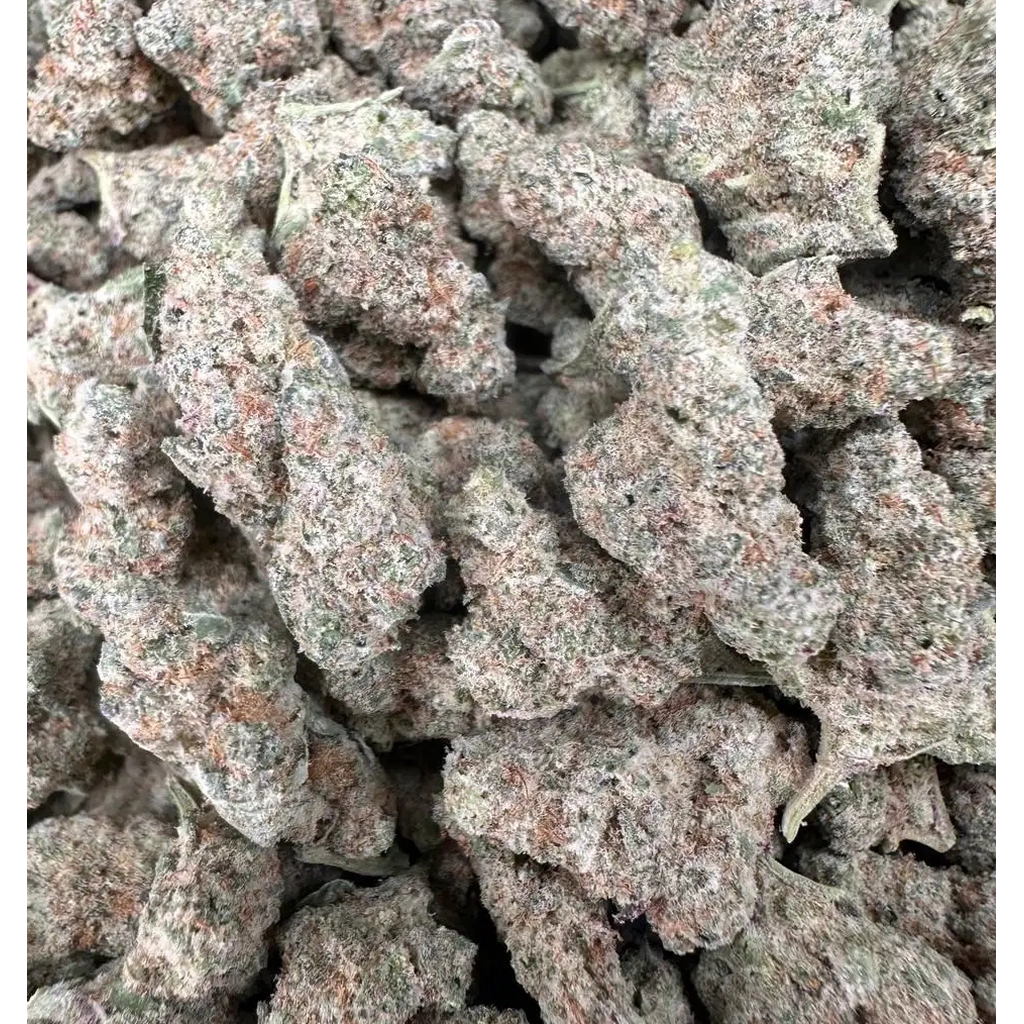
Peanut Butter Breath creates compact grape-sized nugs that are olive or dark green in color, covered in burnt orange pistils with abundant amounts of trichomes.
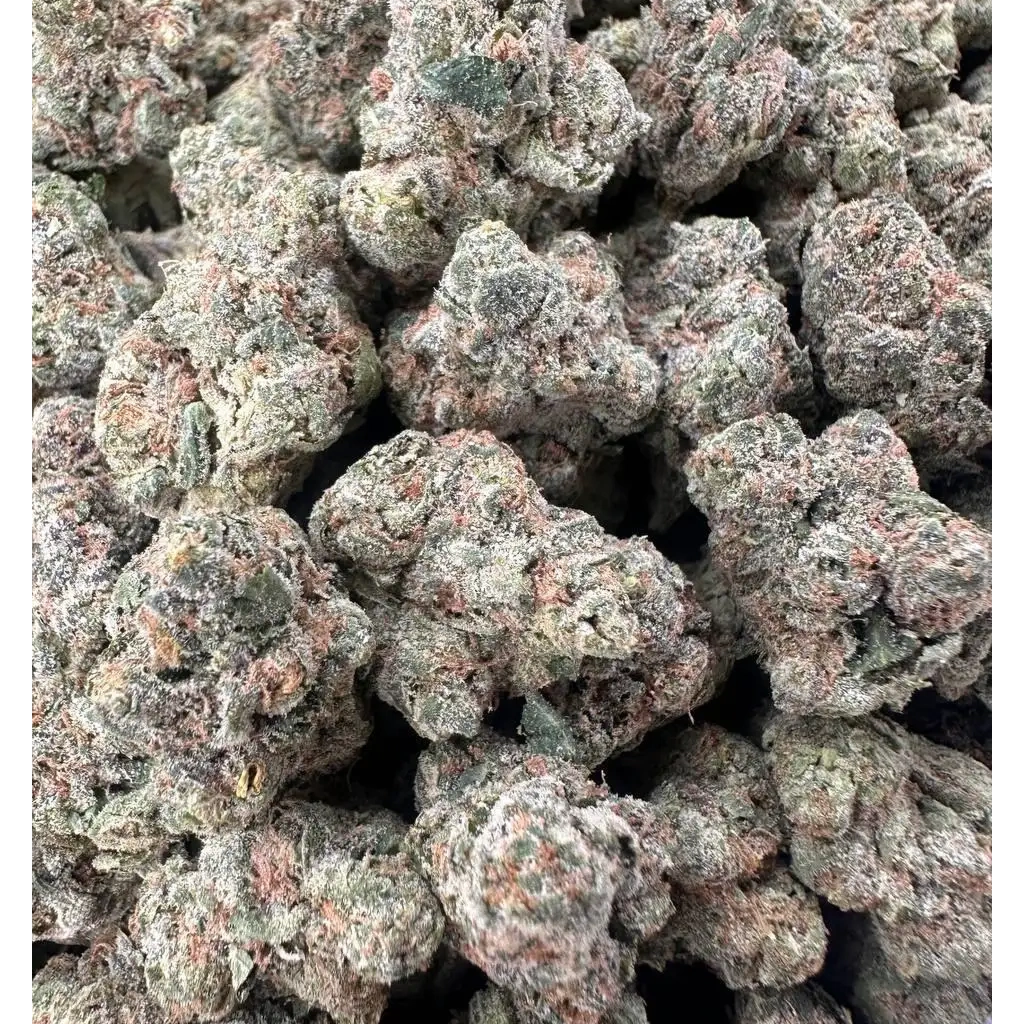
All descriptions point to the same cultivar. Some batches may look like long olive-green flowers with thick, frosty purple trichomes. Other samples may appear as light green flowers with fewer orange hairs and possibly some purple in the buds.
However, the purple expression is conditional and depends on genetics and environment. It is more likely to be seen in cooler finishing environments, but not always. If a vendor claims that all of their batches are purple, you should ask for photos of the actual lot.
The abundant trichome coverage is what you can always rely on. This high resin content makes PBB an excellent choice for solventless extraction and for the concentrate that fills wholesale vaporizers. It is also why this variety photographs well. For retailers, the appearance of this strain is not an issue at all. The flavor is the key factor that will either win a customer or lose one.
Peanut Butter Breath is recognized as a tricky cultivar, most fitting for growers with experience. Its flowering period takes approximately 8 to 10 weeks.
There is some discrepancy about the structure, and it should be noted. On one hand, some sources list it as short to average height. On the other hand, according to the breeder’s information and several growers’ reports, it is tall and leggy, stretching heavily during the flowering stage. Those grower descriptions seem more truthful, because databases usually generalize rather than observe the process. The yield is medium; one indoor grower said the harvest was only average for the effort involved.
The more pertinent issue is mold. With the combination of dense flowers and high resin content, PBB tends to be vulnerable to humidity. Cultivating it indoors under controlled conditions is highly recommended, while outdoors is certainly possible, albeit risky. It is exactly the kind of cultivar that makes the choice of cultivation partners worth scrutinizing before you commit to volume.
If you like Peanut Butter Breath, start with its parents. Do-Si-Dos delivers the resin and the weight; Mendo Breath brings the sweeter, gassier side of the family.
From there, the nutty and dessert-adjacent neighbors are the obvious next step:
Gorilla Butter and Butterstuff are PBB’s own descendants, so they carry the profile forward most directly. Buyers who want that same loud, gassy shelf presence in a sweeter package often pair it with Runtz × Jealousy.
Peanut Butter Soufflé is a Do-Si-Dos hybridized with Lava Cake. This strain has one parent in common with PBB but is free from any Mendo Breath influence, and it shows more of a nutty, chocolate character.
Peanut Butter Gelato is more complicated. According to some sources, it is a four-way hybrid with no PBB involvement at all. Others use the name for a simple PBB and Gelato cross. Make sure you understand the genetics before purchasing.
Peanut Butter Breath differentiates itself from any trend in the marketplace. In a lineup filled with candy, cake, and gelato strains, a savory and nutty taste gives budtenders something specific to recommend. That is also why any THCa wholesale distributor worth dealing with should be able to tell you exactly which cut they are shipping.
Three things to check prior to ordering in bulk:
One merchandising tip: keep shelf copy focused on flavor and terpenes, and do not mention treating any conditions. Verified buyers can run all three checks before ordering once they apply for wholesale.
What has allowed Peanut Butter Breath to thrive is the ability to offer something in very limited supply: a flavor that really stands out. The genetics are well established, resin production is consistent, and the effects profile is predictable enough for consumers to know what they are buying.
What is unpredictable is the potency, which fluctuates between the mid-teens and the high twenties, and the phenotype, which changes depending on the cut. These two factors make the Certificate of Analysis far more important than what the label on the jar claims.
Consumers should go light, respect the creeper, and have snacks on hand. Retailers should know the cut and read the terpene profile before purchasing. That is how the peanut butter breath weed strain earns its shelf space. TerpSourced is a Houston-based wholesale supplier of bulk THCa flower, pre-rolls, vapes, and edibles, working with cultivation partners across Texas, California, and Oklahoma so that every lot arrives with the lab results behind it.
Peanut Butter Breath is a cross created by ThugPug Genetics using Do-Si-Dos and Mendo Breath F2. Its flavors are described as earthy and buttery, while the effects are very relaxing and able to increase appetite. Its other names include Peanut Butter, Peanut Breath, PB Breath, and PBB.
This strain is a hybrid, although it tends to have a more indica-like effect most of the time. Many databases show an equal 50/50 ratio for both. It won the indica strain award at the 2019 Karma Cup event.
Most batches range from 18% to 28% THC, averaging out around 20%. The grower has reported unusual variance, with some samples hitting 28% while others just manage to cross 15%. Potency is entirely dependent on the batch.
The effects users experience are mainly relaxation, sleepiness, and hunger; they usually occur following a quick uplift of the mind. The common adverse effects reported by users include anxiety, headaches, paranoia, dry mouth, and dry eyes.
Buttery, earthy, and woody, with chestnut and cedar aromas, sometimes with citrus or pine. It is a savory terpene profile rather than a sweet one. Garlic and mushroom notes develop after grinding the flower for some reviewers, which is expected from this strain.
Its parents, Do-Si-Dos and Mendo Breath, have the most similar profile. After them, you can give a shot to Butterstuff, Gorilla Butter, Peanut Butter Cookies, Nutter Butter, Peanut Butter Runtz, Gorilla Nut, Tagalongz, God’s Breath, or Gas Truffle.
Sleepiness is quite common among many users, coming in second on the list of reported effects. However, that is user-reported experience rather than any medical fact. It depends on the individual, the dosage, and the particular batch as well.
It depends. Although the breeder claims it may be feasible for newcomers, reviewers point out that it is sneaky and might cause anxiety when taken in higher doses. It is advised that novices try it in very low amounts.
Peanut Butter Breath is a cross between Do-Si-Dos and Mendo Breath. Peanut Butter Soufflé is a cross between Do-Si-Dos and Lava Cake. Though they share the same parent, Soufflé does not contain any Mendo Breath.